Know what you’re asking for
Every LED bid turns on four or five numbers, and if the words are unfamiliar it’s impossible to tell whether two quotes are even for the same wall. Here’s the language, so you can read a Dallas quote properly. Everything below is gear we own and power up in our shop the day before it ships.
ResolutionPixel pitch
The distance in millimetres between the centre of one LED and the next. Smaller number, finer image.
Ask for it when: It’s the first number any quote turns on — and it’s set by how close your nearest viewer and tightest camera lens sit, not by how big the wall is.
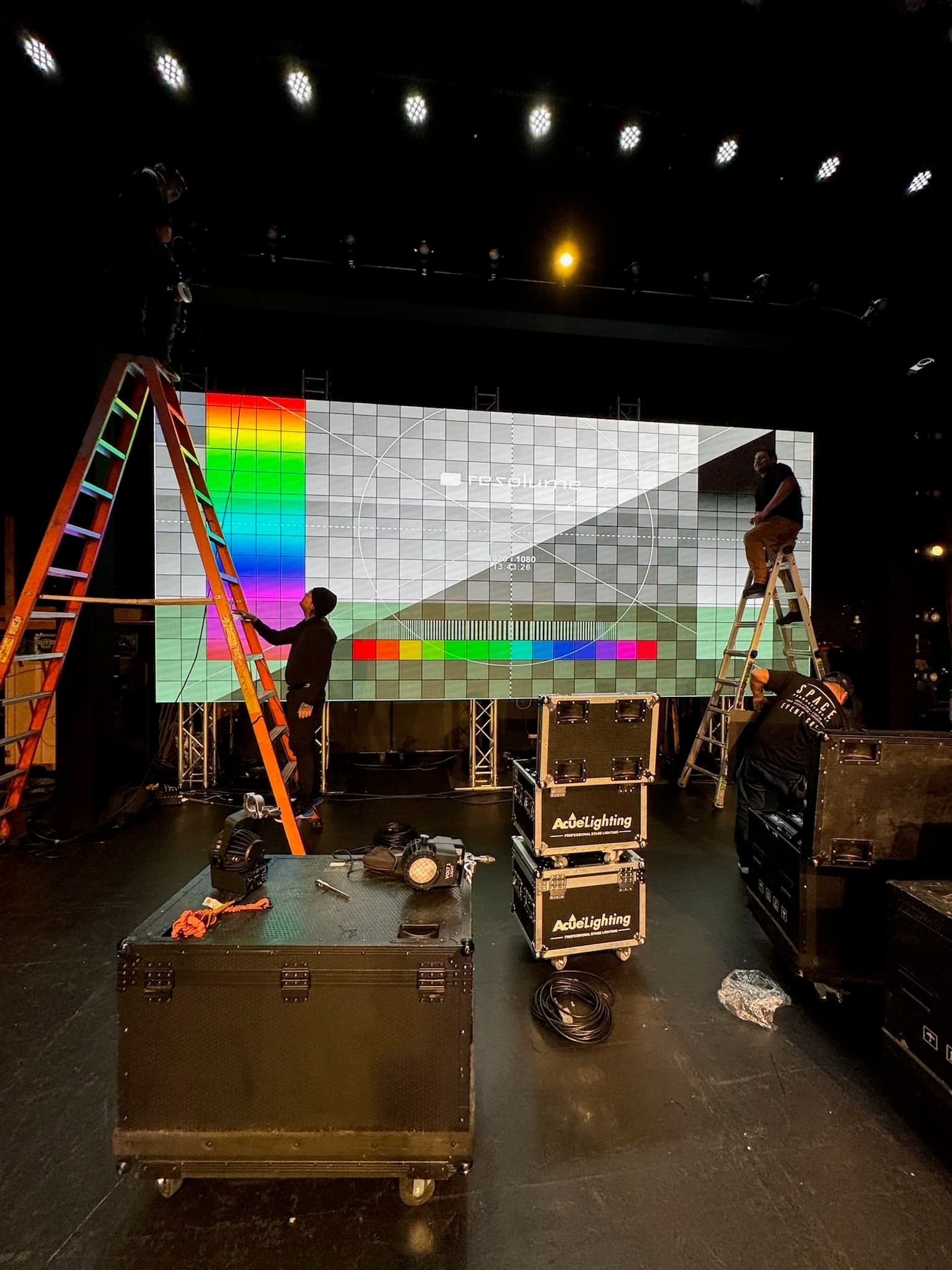
Building blockCabinet
The modular unit walls are built from, usually around 500mm square, locked together into whatever size you need.
Ask for it when: When you’re sizing a wall. Dimensions come in cabinet increments, so a wall is “six by four cabinets” before it’s feet and inches.
BrightnessNits
The brightness measurement. Indoor panels sit around 1,000–1,500; daylight-readable outdoor panels start around 5,000.
Ask for it when: Any time the wall competes with sunlight or a bright room. An indoor panel taken outside doesn’t look dim — it looks blank.
SignalProcessor
The box that scales your content to the wall’s exact pixel dimensions and manages its colour.
Ask for it when: On every wall. The question worth asking is whether a second one runs mirrored as a hot backup — that’s the difference between a glitch and a dead screen.
PlaybackMedia server
The machine that plays your content to the wall frame-accurately, with everything pre-loaded and checked.
Ask for it when: Any show with cues, multiple clips, or content that has to land on a beat. A laptop running slides is not a media server.
RiggingFlown vs. ground-stacked
Flown means hung from the ceiling on motors; ground-stacked means built up from the floor on its own structure.
Ask for it when: Decide early — it changes the price, the sightlines, and the floor space you lose. Not every venue will let you fly.
RiggingFlying frame
The engineered bar a wall hangs from, holding it dead flat and spreading load across the rigging points.
Ask for it when: Every flown wall. It’s the thing the load calculation is actually calculated on.
StructureGround support
Free-standing towers and goalpost spans holding the wall up where there’s nothing to hang from.
Ask for it when: Venues without rigging, outdoor sites, and any ceiling that won’t take the load. It occupies real floor space, so plan the footprint.
FormatIMAG
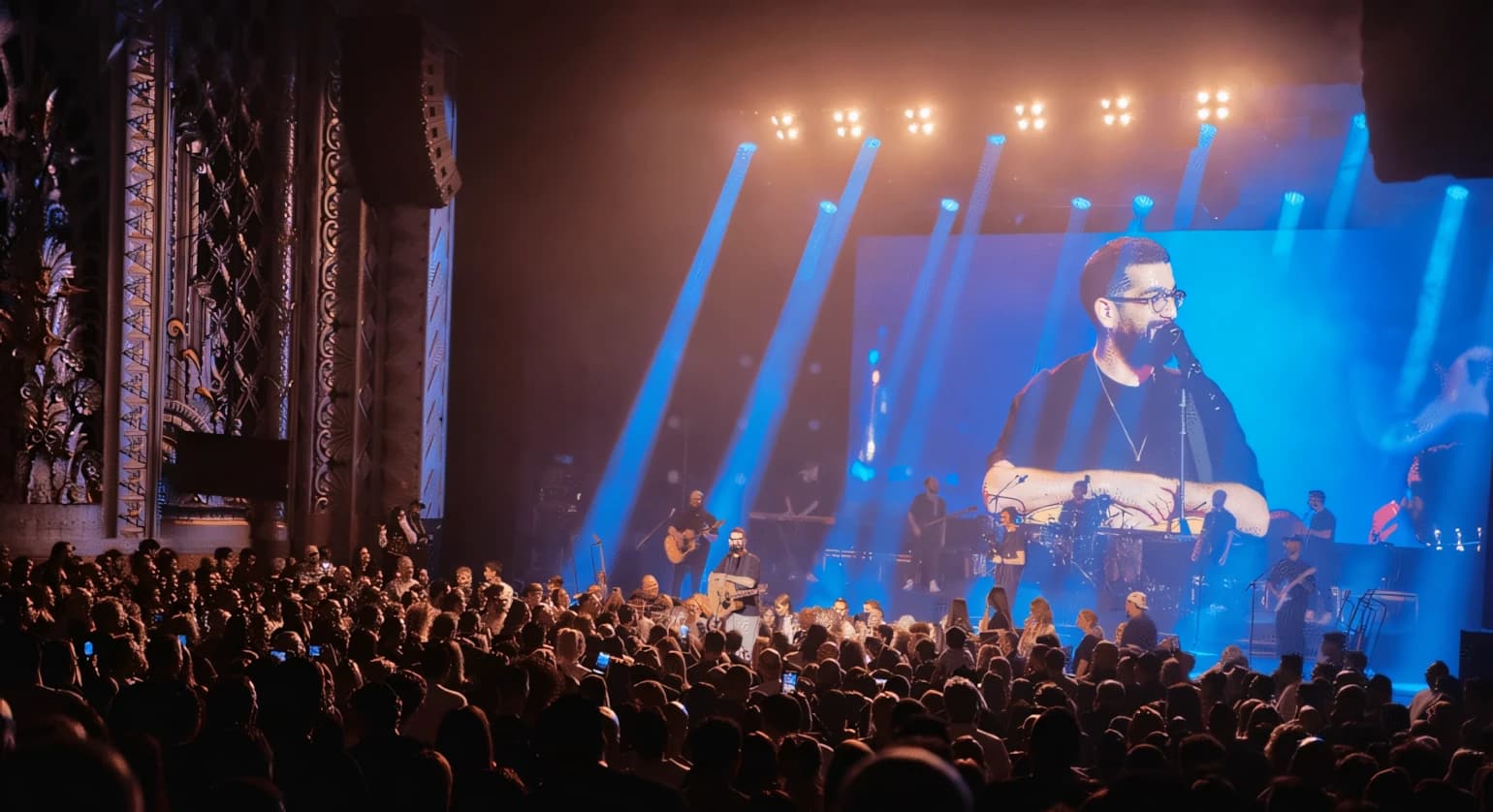
Image magnification — a live camera feed of the stage, so the back of the room can see faces.
Ask for it when: Any room deeper than roughly fifty feet. Without it, half your audience watches people the size of a thumbnail.
ContentCanvas
The exact pixel dimensions of your finished wall, which your content has to be built to.
Ask for it when: Ask for it the moment the wall size is locked. Content built to the wrong canvas gets stretched, letterboxed, or cropped.
CameraRefresh rate
How many times per second the panel redraws. Low refresh looks fine to the eye and bands on camera.
Ask for it when: Anything filmed or streamed. It’s why a wall that looked perfect in the room shows scan lines in the edit.
RedundancyHot spares
Spare cabinets and processing travelling with the wall, ready to swap in.
Ask for it when: Always ask. A wall with no spares on site is a wall with a single point of failure.
RedundancyRedundant data & power
Looped data and split power feeds, so one cable or circuit failing doesn’t take a section dark.
Ask for it when: Any show that matters. It costs very little and prevents the most visible kind of failure.
Build qualitySeam
The join between cabinets. On a well-built wall it disappears; on a badly aligned one you see a grid.
Ask for it when: Worth asking how flat the finished wall will be. Seams are a build-quality question, not a panel-spec one.