Know what you’re asking for
Scenic is the part of a show that photographs, and the vocabulary is mostly workshop language. Here’s what each term means for a Los Angeles build, so you can brief a look rather than describe it twice. Everything below is fabricated and dry-assembled in our own shop first.
StructureHard flat
A rigid faced panel — the basic wall unit a set is assembled from.
Ask for it when: Any solid-looking set wall. Flats are what make a room read as architecture rather than as drape.
StructureSoft goods
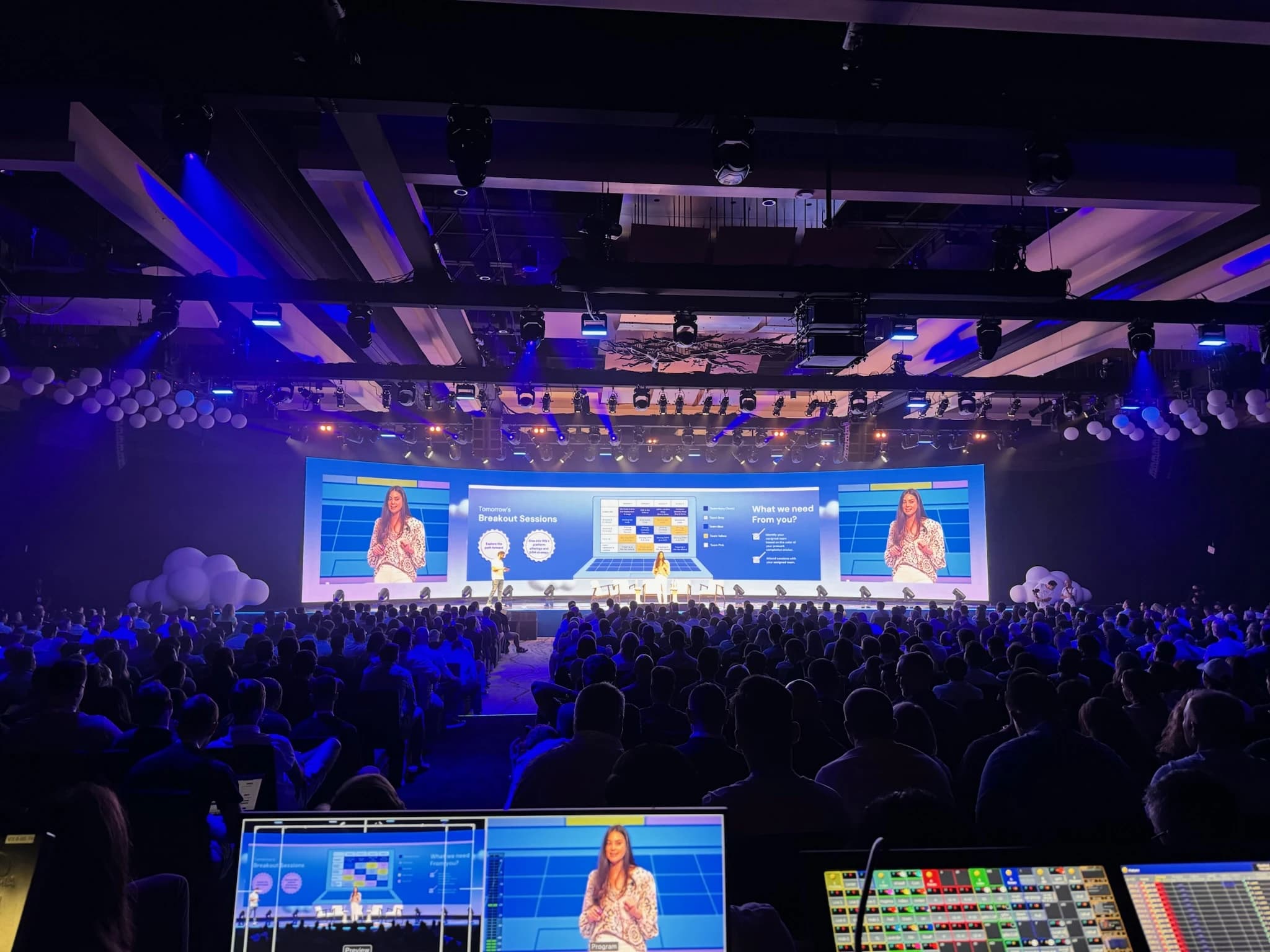
Drape, backdrops, and fabric used to define space, mask, or absorb light.
Ask for it when: Masking backstage, softening a room, and covering ground quickly. Far cheaper per square foot than hard scenic.
FormHeader
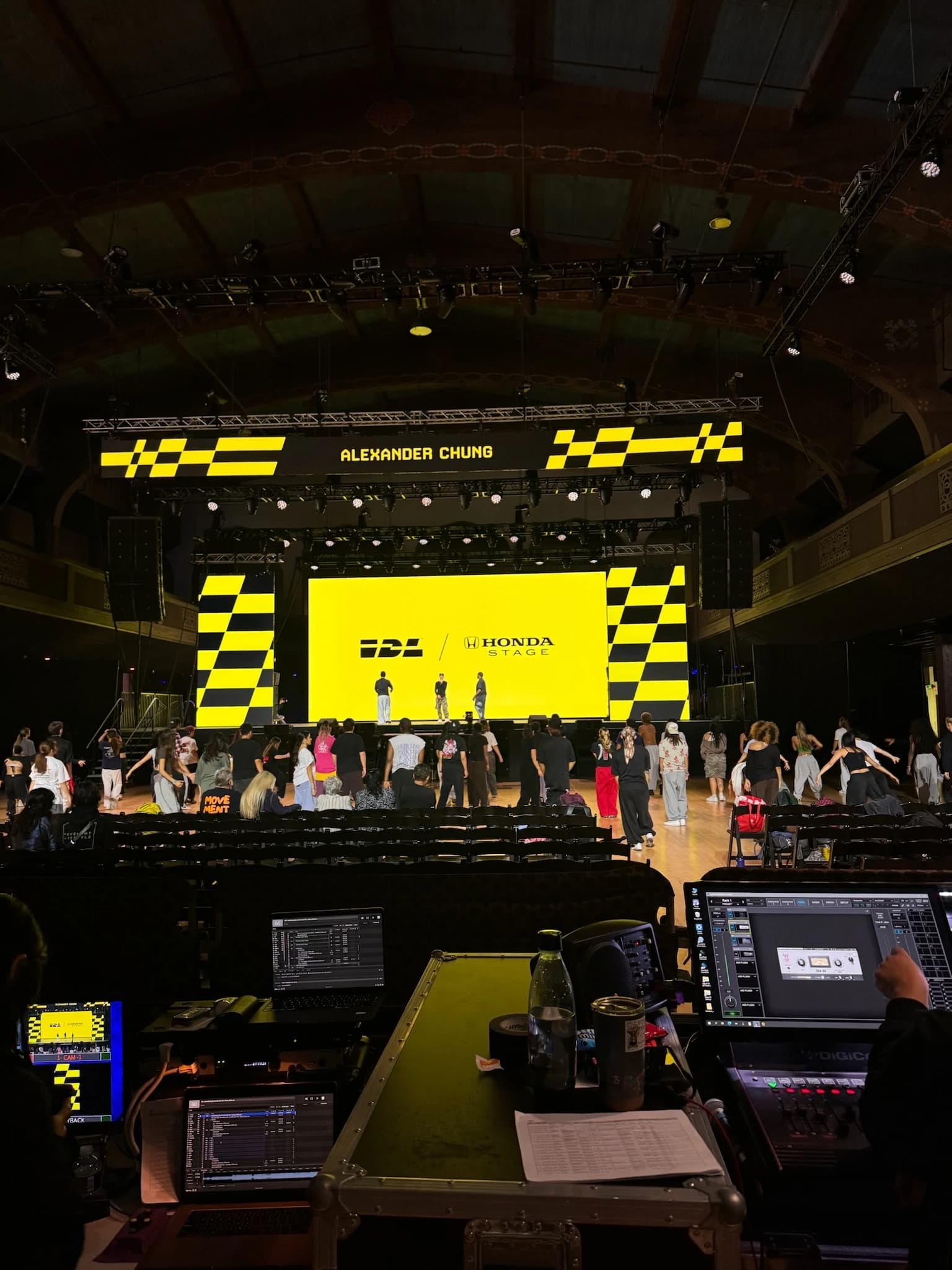
A horizontal element spanning above the stage or an entrance, framing what sits beneath it.
Ask for it when: When a stage needs a defined top edge — it’s what stops a set looking like it just stops.
FormColumn / totem
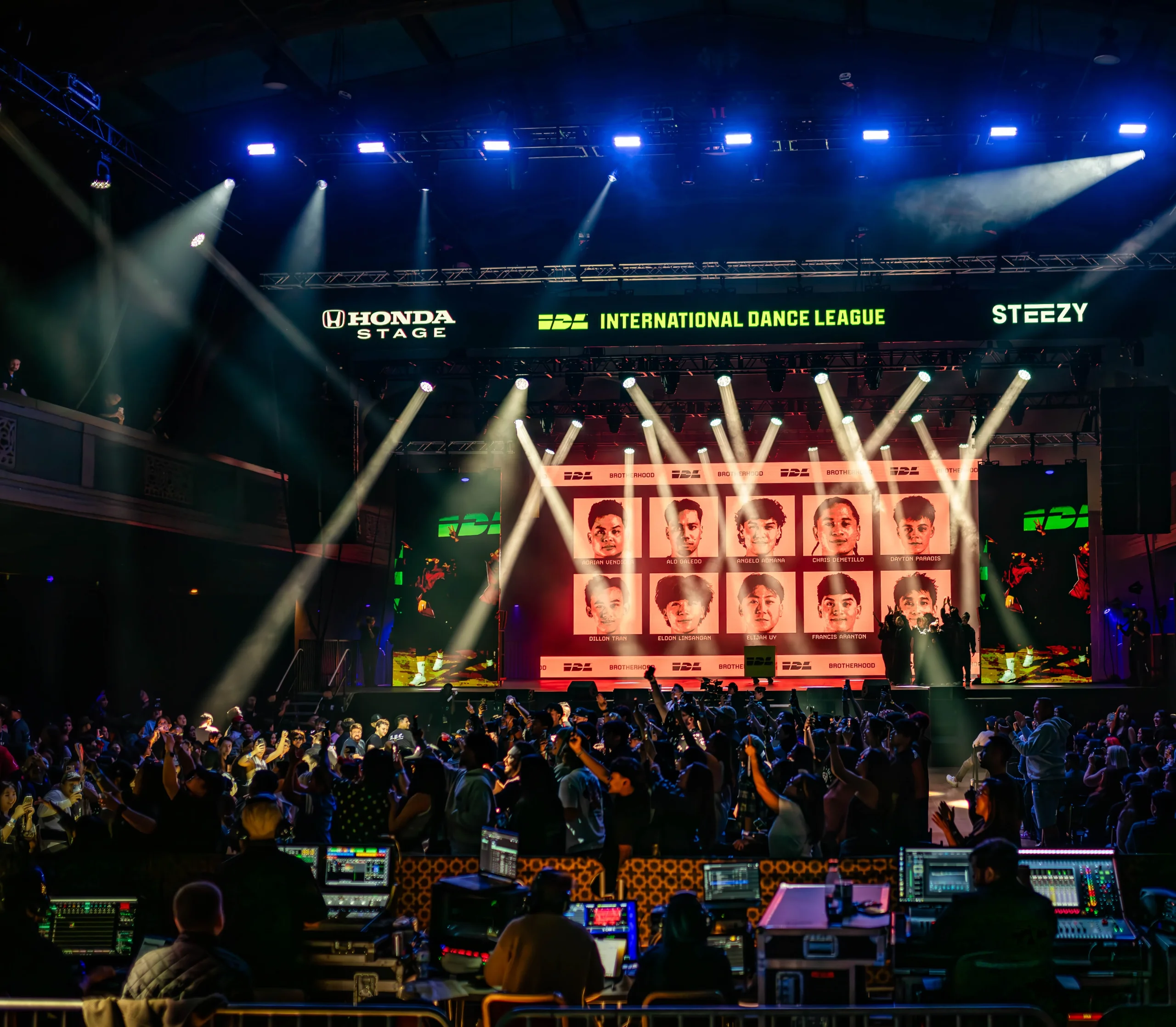
Free-standing vertical elements, often used in pairs or runs to add rhythm and depth.
Ask for it when: Entrances, sponsor moments, and adding dimension to a set that would otherwise be a flat wall.
FinishPrint wrap
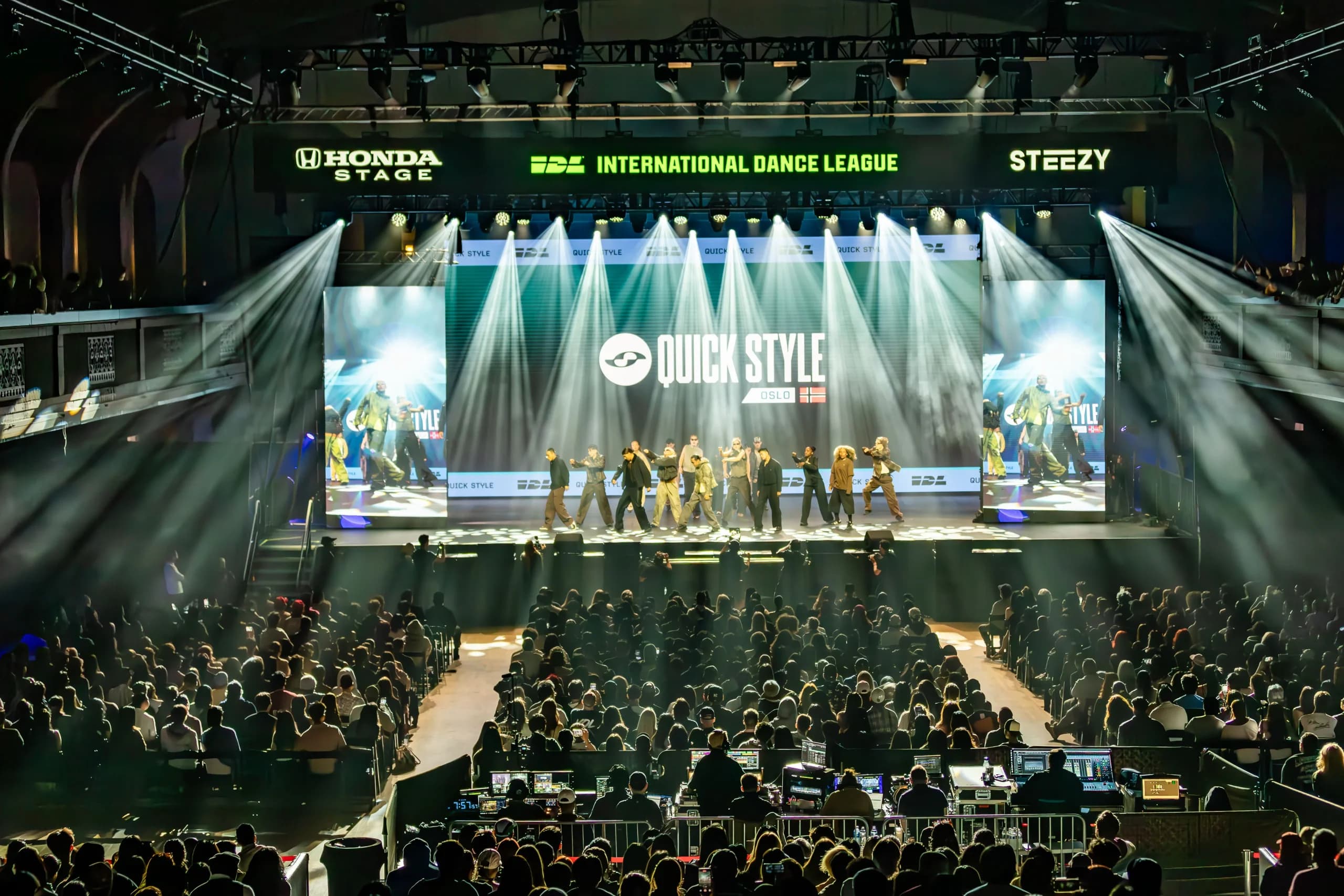
Large-format printed vinyl or fabric applied to a built surface.
Ask for it when: Branded builds. It’s the fastest way to put artwork on scenic, and it needs print-ready files at real scale.
FinishCNC cut
Machine-cut shapes and letterforms, cut from your artwork rather than approximated.
Ask for it when: Dimensional logos and cut-out patterns — anywhere a printed version would look flat.
FinishPaint finish
The surface treatment and sheen — matte, satin, gloss, or textured.
Ask for it when: Always specify it. Matte kills reflections under lighting; gloss photographs beautifully and shows every fingerprint.
ComplianceFlame certificate
Documentation that materials meet the venue’s fire rating, covering fabric and treated surfaces.
Ask for it when: Every venue asks, and many won’t let a set in without it. It’s produced with the build, not chased afterwards.
ApproachModular vs. one-off
Building from a reusable kit versus fabricating bespoke pieces for this show only.
Ask for it when: A budget conversation worth having early. Modular is cheaper and faster; one-off is the only way to get an exact shape.
ProcessShop pre-build
Dry-assembling the full set in the shop before it ships, and correcting fit there.
Ask for it when: Every set of any complexity. The first assembly should never happen on your load-in clock.
MomentReveal
A mechanism that hides something and then exposes it on cue — a kabuki drop, a tracked curtain, a lifting panel.
Ask for it when: Product launches and unveilings. It has to be designed into the set from the start, not added late.