How to Spec an LED Wall: Pixel Pitch, Brightness & Viewing Distance
Three numbers do most of the work — pixel pitch, brightness, and how far the audience sits. Get them right and the wall disappears into the show; get them wrong and it’s all anyone notices.
Most “which LED wall do I need?” conversations skip straight to size. But a 20-foot wall at the wrong pixel pitch, or one that’s too dim for the room, fails just as badly as one that’s too small. Speccing a wall is really about matching three variables to your specific room and audience. Here’s how they work — and how we balance them on a site walk.
Pixel pitch: how sharp, how close
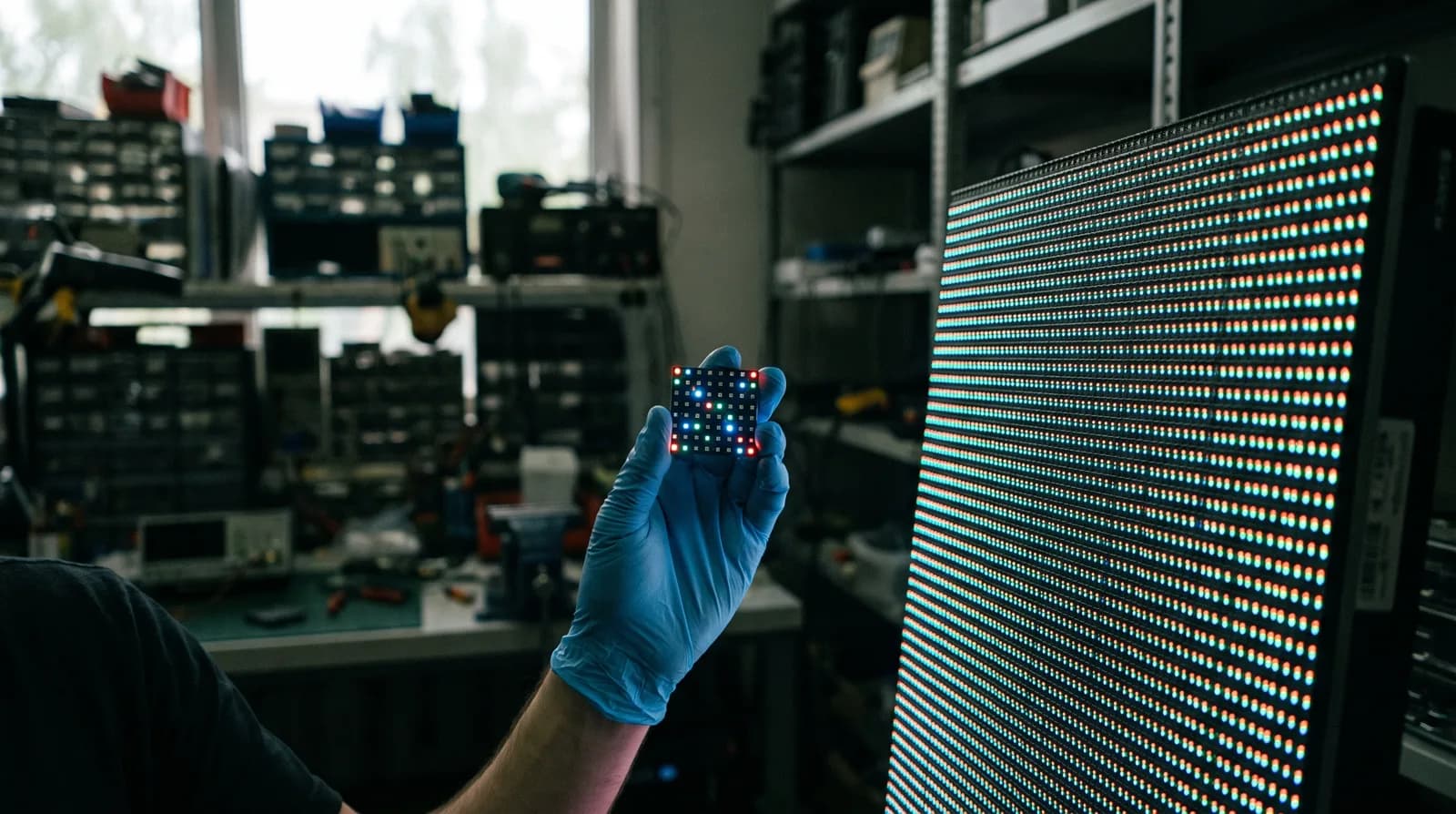
Pixel pitch is the distance in millimeters between the center of one LED and the next. Smaller pitch means more pixels packed in, a sharper image, and a higher price. The catch is that pitch only matters relative to how close people get: a coarse wall looks flawless from the back of an arena and pixelated from ten feet away.
- 1.2–1.9mm — broadcast and boardrooms where cameras and people get very close
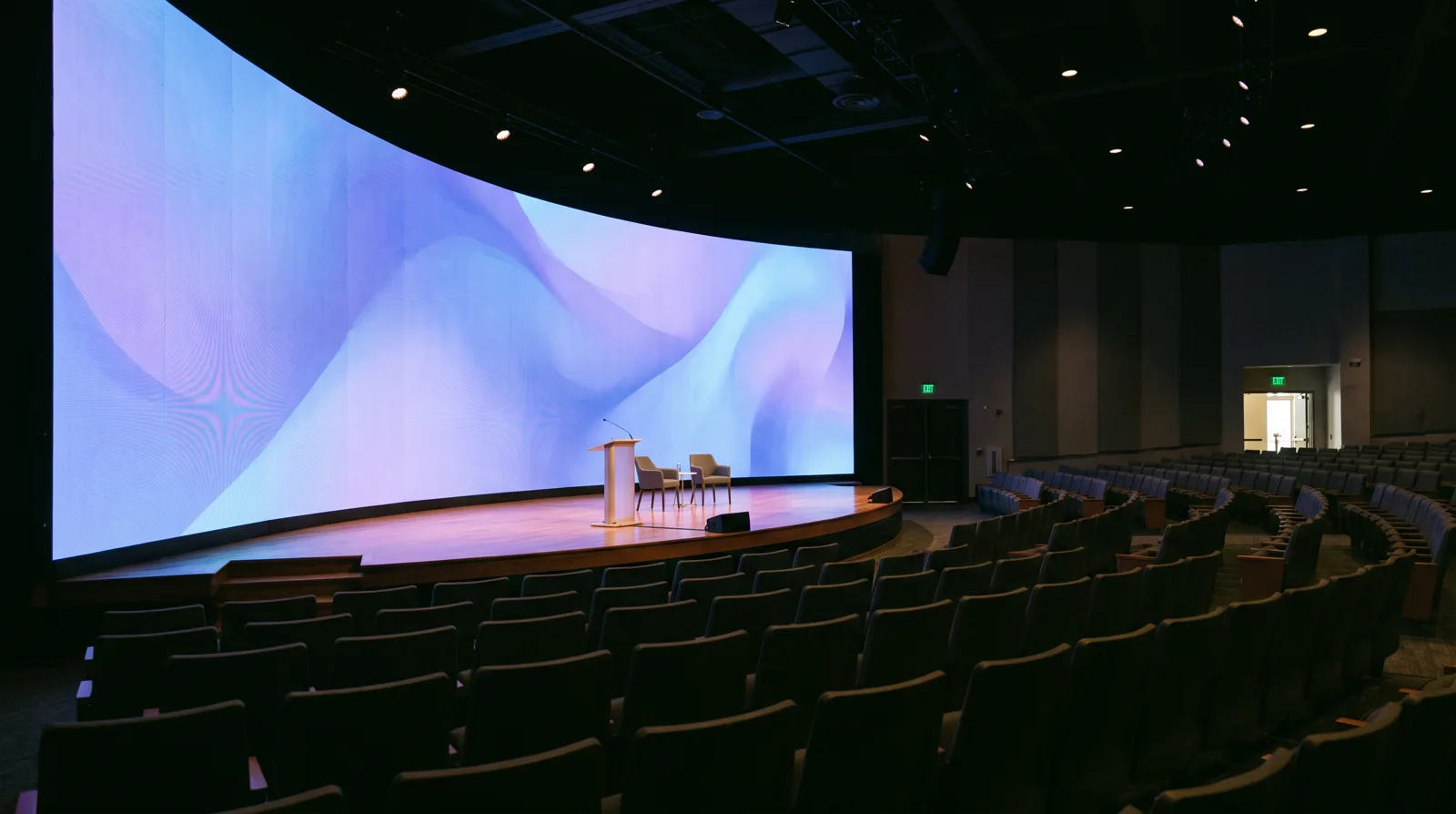
- 2.0–2.6mm — corporate keynotes and IMAG, the workhorse indoor range
- 2.9–3.9mm — large-format indoor and big stage backdrops
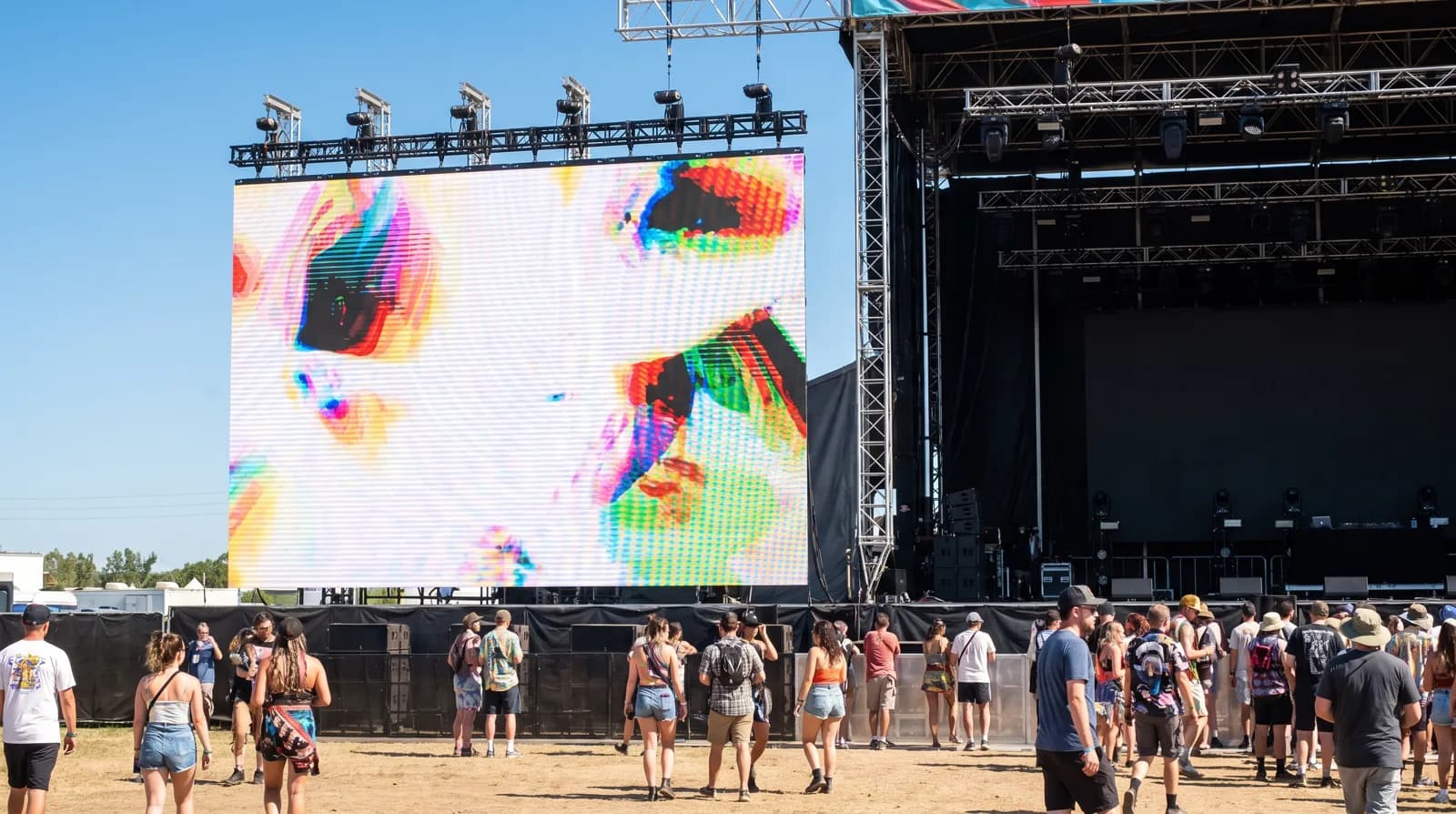
- 4.0–6.0mm+ — outdoor and long-throw, where the crowd is far enough back
Brightness: match the room, don’t max it out
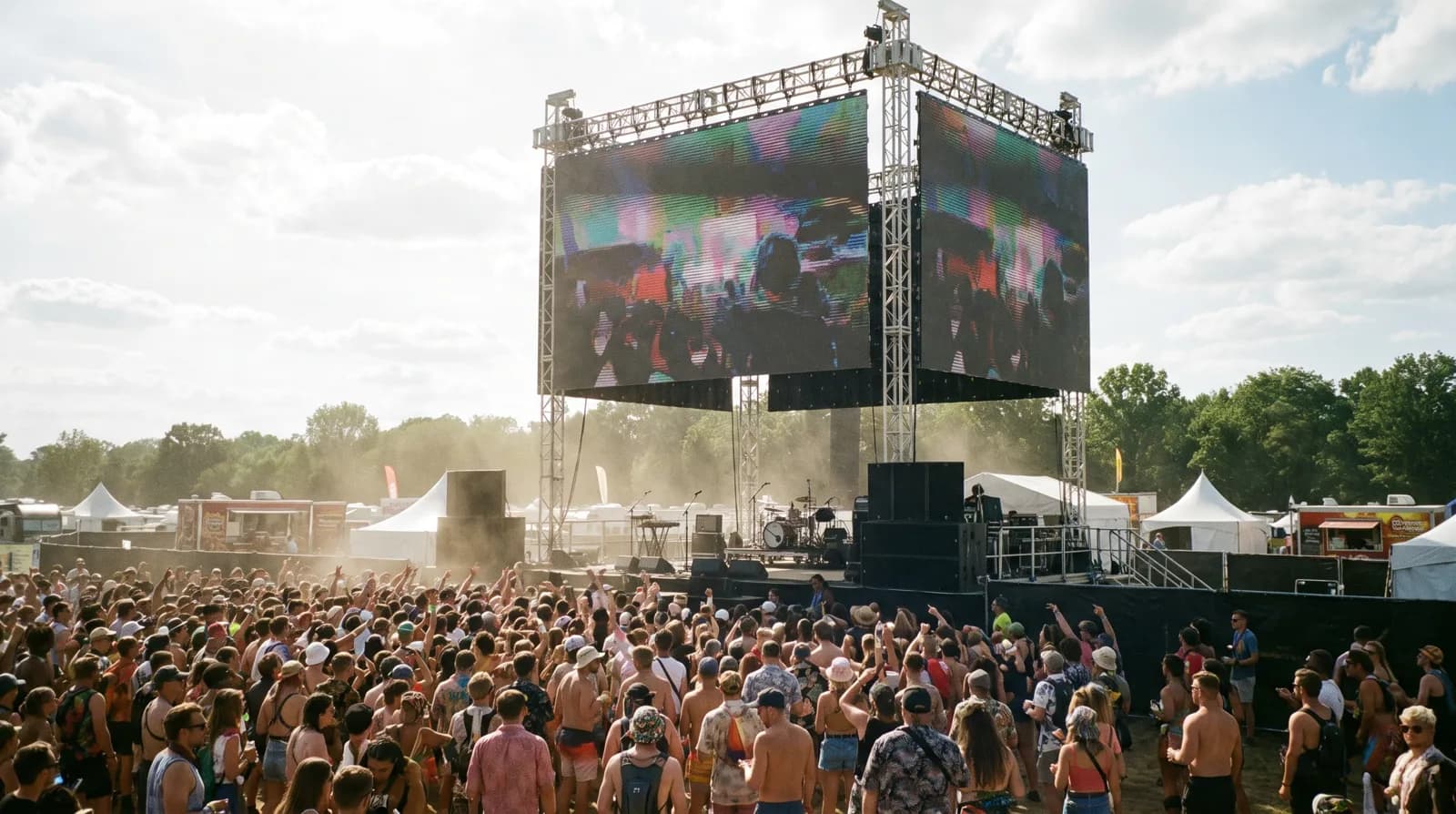
Brightness is measured in nits. Indoors, more is not better — an overdriven wall blows out on camera and tires the eye. Most indoor walls sit comfortably around 800–1,500 nits. Outdoors is the opposite problem: you’re fighting the sun, so high-bright panels running 5,000+ nits (with auto-dimming after dark) are the difference between a vivid picture and a gray smudge at noon.
Viewing distance: the rule of thumb
A useful starting point: the minimum comfortable viewing distance in meters is roughly equal to the pixel pitch in millimeters. A 2.6mm wall reads cleanly from about 2.6 meters back; a 4mm wall wants roughly 4 meters. Below that distance you start to see structure. So before you choose a pitch, figure out where the nearest important viewer — including the camera — actually sits.
Putting it together
The three numbers are a triangle: tighten the pitch for close viewers, raise the brightness for ambient light, and let the room’s geometry decide how far you can push each one. That’s the whole job of a site walk — we measure the throw, the sightlines, and the light, then spec the exact panel that reads everywhere it needs to, on camera and in the back row, without overspending on resolution nobody will see.
Key takeaways
- Pixel pitch (mm) ≈ minimum comfortable viewing distance (m) — choose it for your closest important viewer and the camera.
- Indoors, aim for the right brightness, not the highest; outdoors, prioritize high-bright panels (5,000+ nits).
- Size matters least of the three — a correctly speced smaller wall beats an oversized, wrong-pitch one.