Indoor vs. Outdoor LED Walls: What Actually Changes
Once the doors are open, the rules change. Brightness, weather, and rigging decide whether an outdoor wall reads at noon — or washes out the moment the sun hits it.
Indoor and outdoor LED walls can look identical in a rendering and behave completely differently on site. The panels, the rigging, and the prep are built for different enemies: indoors you’re managing cameras and contrast; outdoors you’re fighting the sun, the wind, and the forecast. Here’s what actually changes.
Brightness is the headline difference
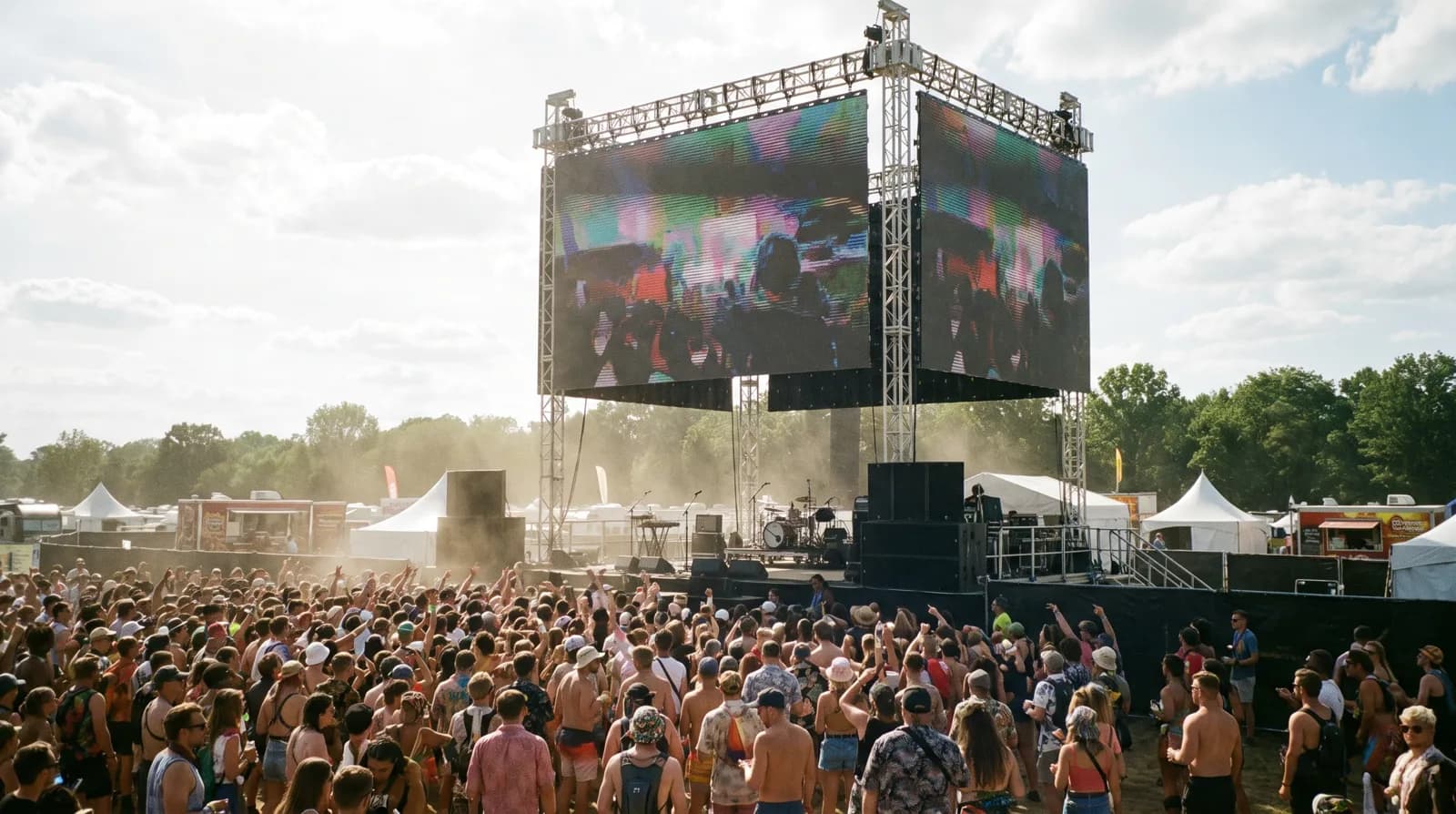
Indoor walls are tuned for controlled light and camera — roughly 800–1,500 nits, often dialed down so they don’t blow out on IMAG. Outdoor walls need 5,000 nits or more to stay readable in direct sun, with auto-dimming so they don’t blind the crowd after dark. Put an indoor wall outside at noon and the picture disappears; that single number, nits, is the first thing that separates the two.
Weather and IP rating
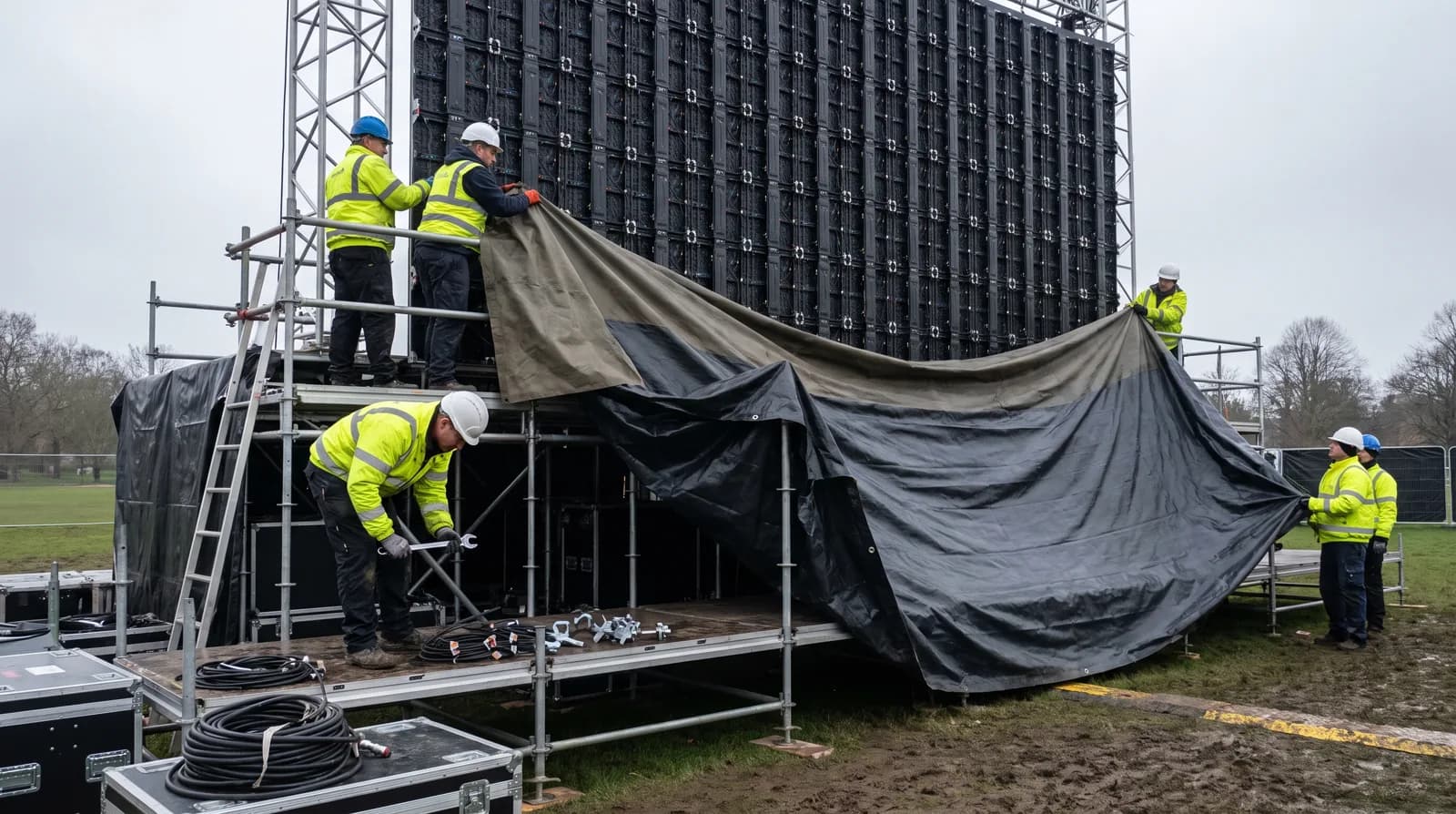
Outdoor panels carry an IP rating for water and dust resistance, with sealed connectors and protected cable runs. But “weatherproof” is a system, not a sticker — it includes covers, drainage, and a rigging plan engineered for wind load before anything goes up. We plan for the forecast we don’t want, not the one we hope for.
Pixel pitch and viewing distance still rule
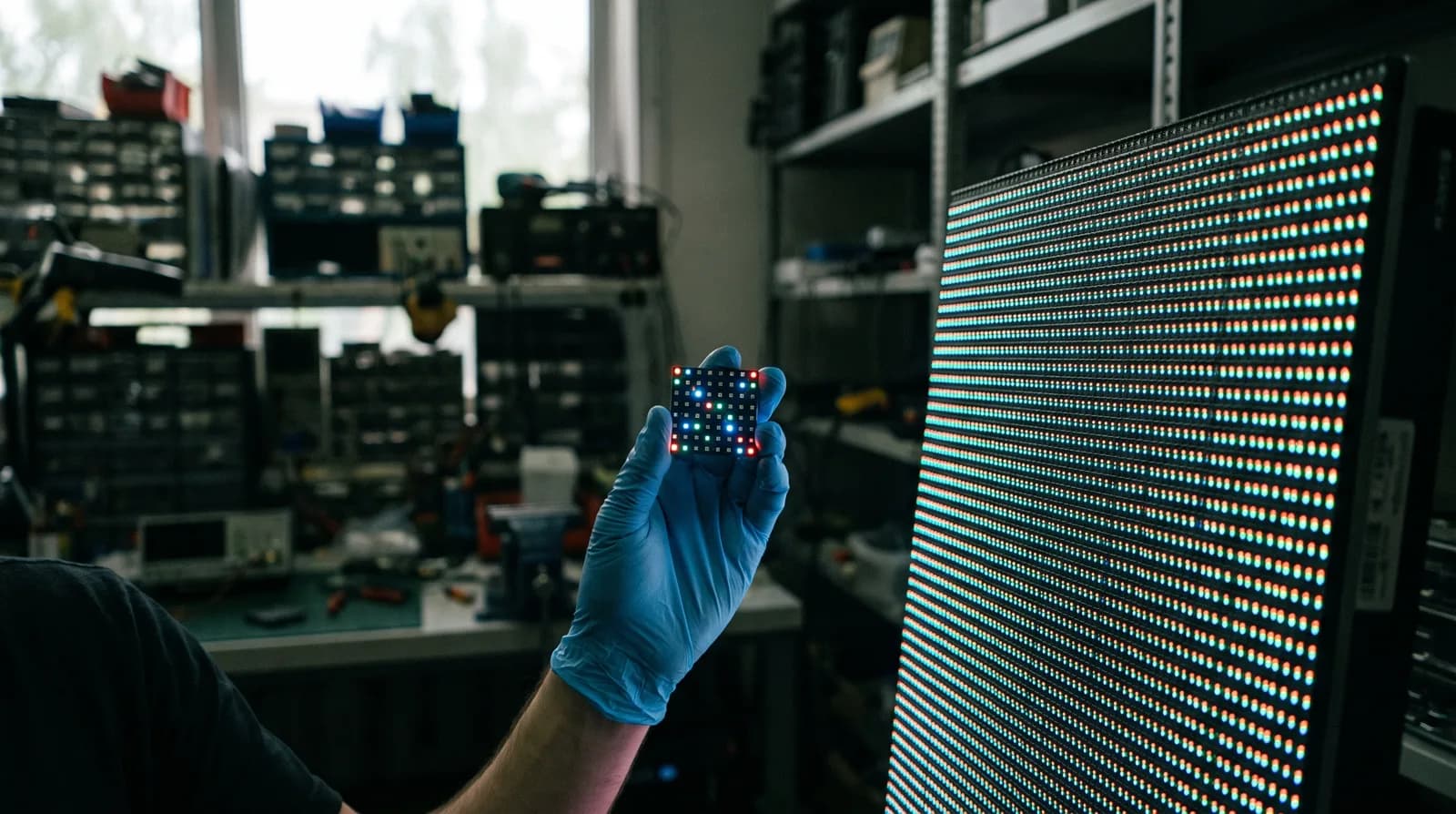
Outdoor crowds usually stand farther back, so outdoor walls often run a coarser pitch (4mm+) without anyone noticing — which also helps brightness and cost. Indoors, where the front row and the camera are close, fine pitch matters more. The viewing-distance rule still applies either way: choose pitch for your nearest important viewer.

Rigging and power
Outdoor builds lean on ground support and engineered ballast far more than flown indoor rigs, and they draw cleaner, more redundant power because there’s rarely a friendly house panel nearby. More structure, more distro, more contingency — all of it sized to the wall and the conditions.
Key takeaways
- Brightness (nits) is the make-or-break difference: 5,000+ for daylight, dialed-down for indoor camera work.
- Outdoor = IP-rated panels plus a weather and wind-load plan, not just a sticker.
- Outdoor crowds sit back, so a coarser pitch is usually fine — and helps brightness and budget.