Know what you’re asking for
Curved, columnar, and custom builds are mostly a geometry and content problem rather than a panel problem. Here’s the vocabulary for shaping a Los Angeles build, so the design you approve is the one that can actually be built. Everything below is prototyped in our LA shop before it ships.
GeometryRadius
How tight a curve is. Every cabinet type has a minimum radius it can bend to before it fights you.
Ask for it when: As soon as a curve is on the table. The radius decides which panel can build it, and therefore the price.
Panel typeFlexible module
A panel on a bendable backing that can form curves and waves rigid cabinets can’t.
Ask for it when: Organic shapes, tight radii, and wrapping objects. Lower resolution and more expensive per square foot — worth it only where the shape earns it.
FormColumn wrap
Panels wrapped fully around a cylinder so the content has no visible start or end.
Ask for it when: Lobby and activation centrepieces meant to be walked around, where a flat screen has a bad side.
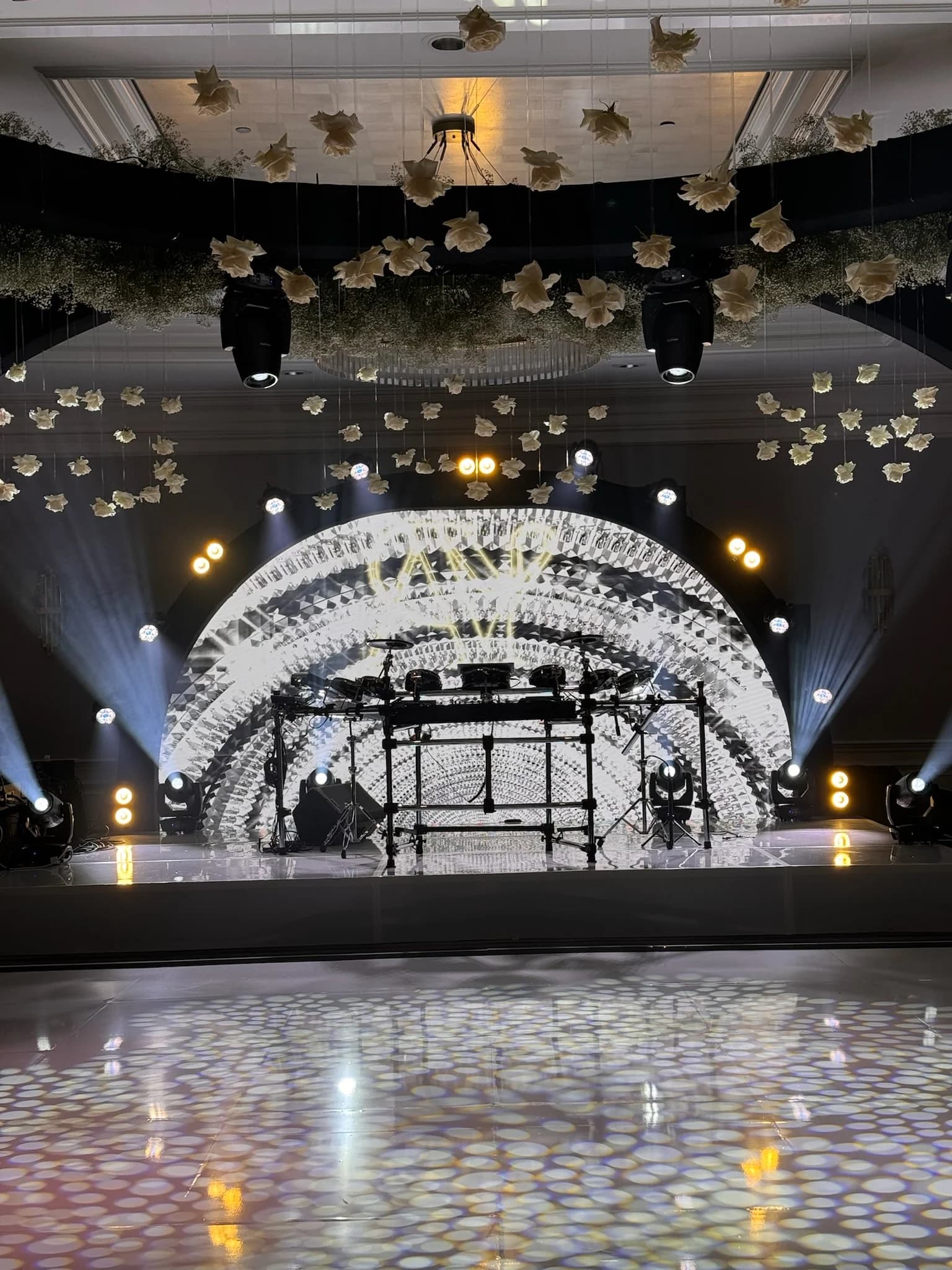
FormArch / header
A curved span above an entrance or stage, usually built from a mix of straight and angled sections.
Ask for it when: Entrances, reveals, and stage crowns — where the wall frames something rather than being the thing itself.
GeometryCorner module
Purpose-made pieces that turn a wall through a hard angle without an ugly join.
Ask for it when: Any L-shape or box build. The corner is where a custom wall visibly succeeds or fails.
Panel typeTransparent LED
Mesh-like panels you can partly see through, so light and sightlines pass behind them.
Ask for it when: Window installs and layered stage looks where a solid wall would block a view or an entrance.
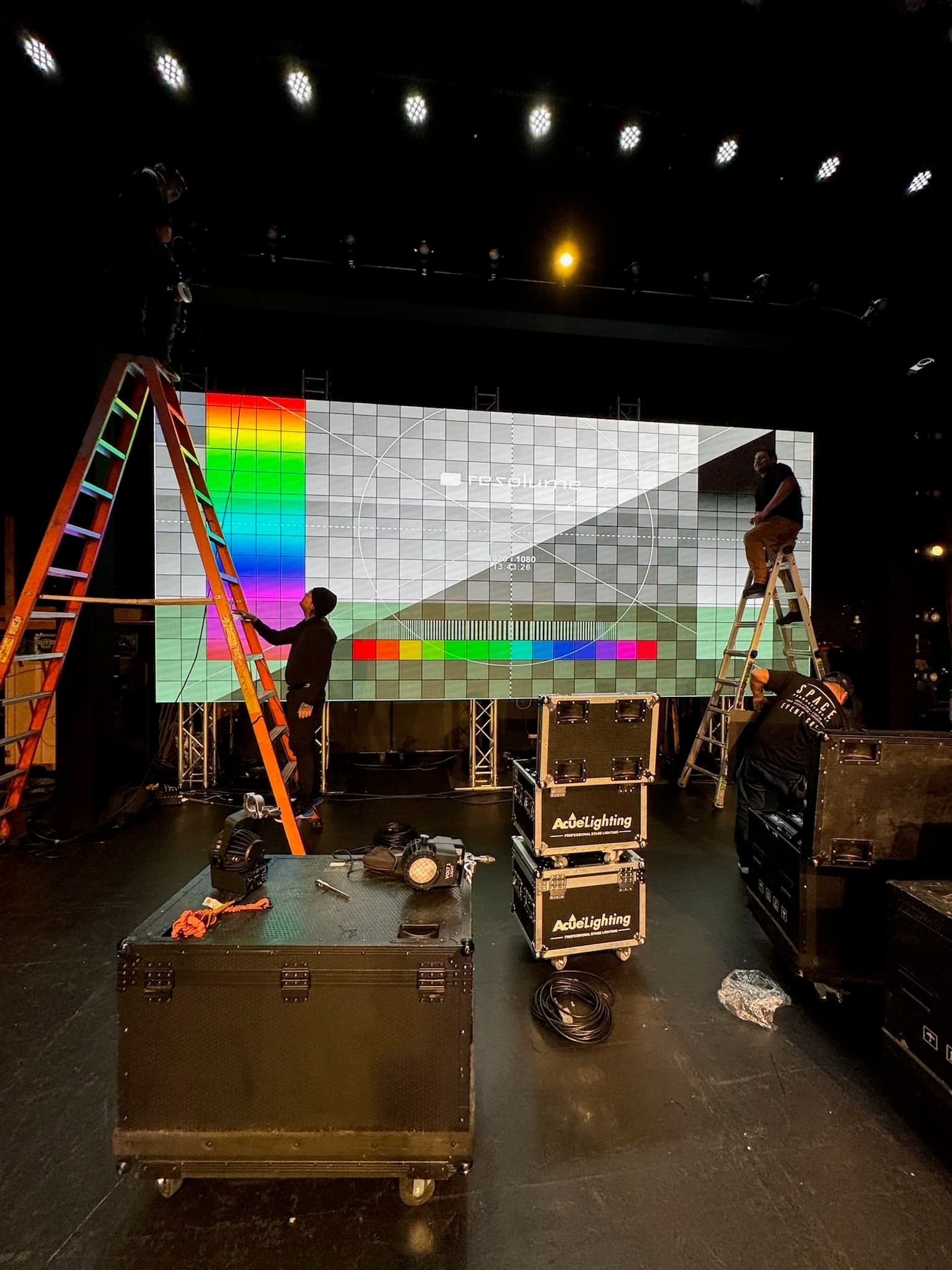
ContentPixel map
The layout describing where every panel sits in the overall canvas, including the odd-shaped ones.
Ask for it when: Every non-rectangular build. Without it, content lands on the wrong sections — the classic custom-wall failure.
ContentContent warp
Pre-distorting content so it reads correctly once it’s on a curved or angled surface.
Ask for it when: Any curve. Flat content on a curved wall looks stretched at the edges unless it’s been mapped for the shape.
StructureBespoke sub-frame
Custom-fabricated structure holding a shape the standard rigging kit doesn’t support.
Ask for it when: Genuinely one-off geometry. It’s designed and built alongside the wall, not sourced from a catalogue.
ProcessShop pre-build
Assembling the full shape in our shop first, powering it up, and mapping content to it.
Ask for it when: Every custom build. The point is that the first time the geometry is attempted is not on your show floor.
Build qualitySeam tolerance
How cleanly panels meet along a curve, where small errors compound around the arc.
Ask for it when: Curved builds especially. It’s the difference between a smooth surface and a faceted one.