Curved & Creative LED: Walls That Become the Set
When a flat rectangle isn’t the idea. How a designer’s render becomes a curved, columnar, or wrapped LED build that actually rigs, powers, and reads as one surface.
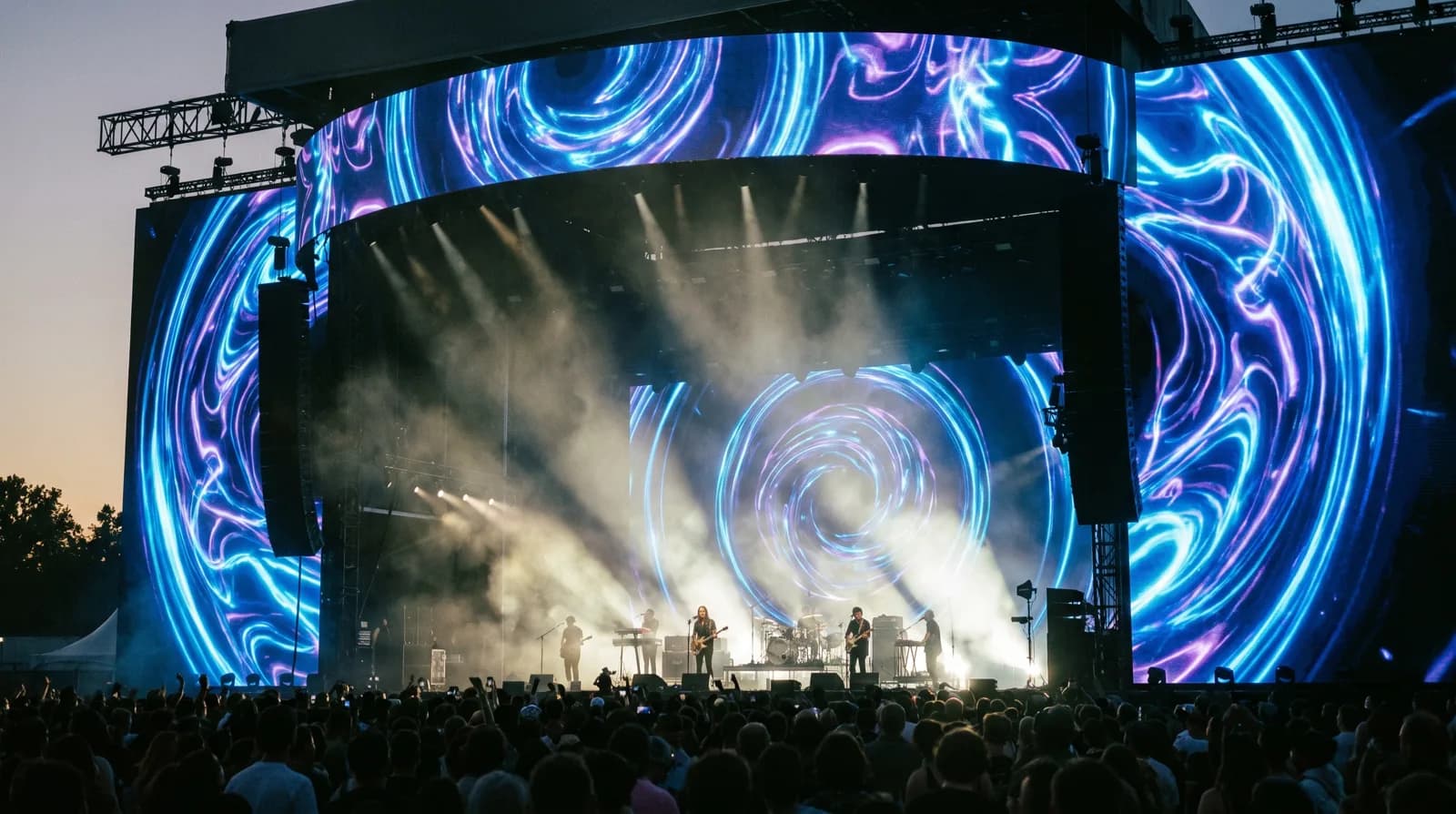
Most LED is a screen behind the stage. Creative LED is the opposite instinct — building the screen into the room so it becomes the set. Curved backdrops, freestanding columns, arches, walkable floors, full immersive volumes: the geometry the designer drew, made real instead of flattened into the nearest rectangle.
From render to riggable
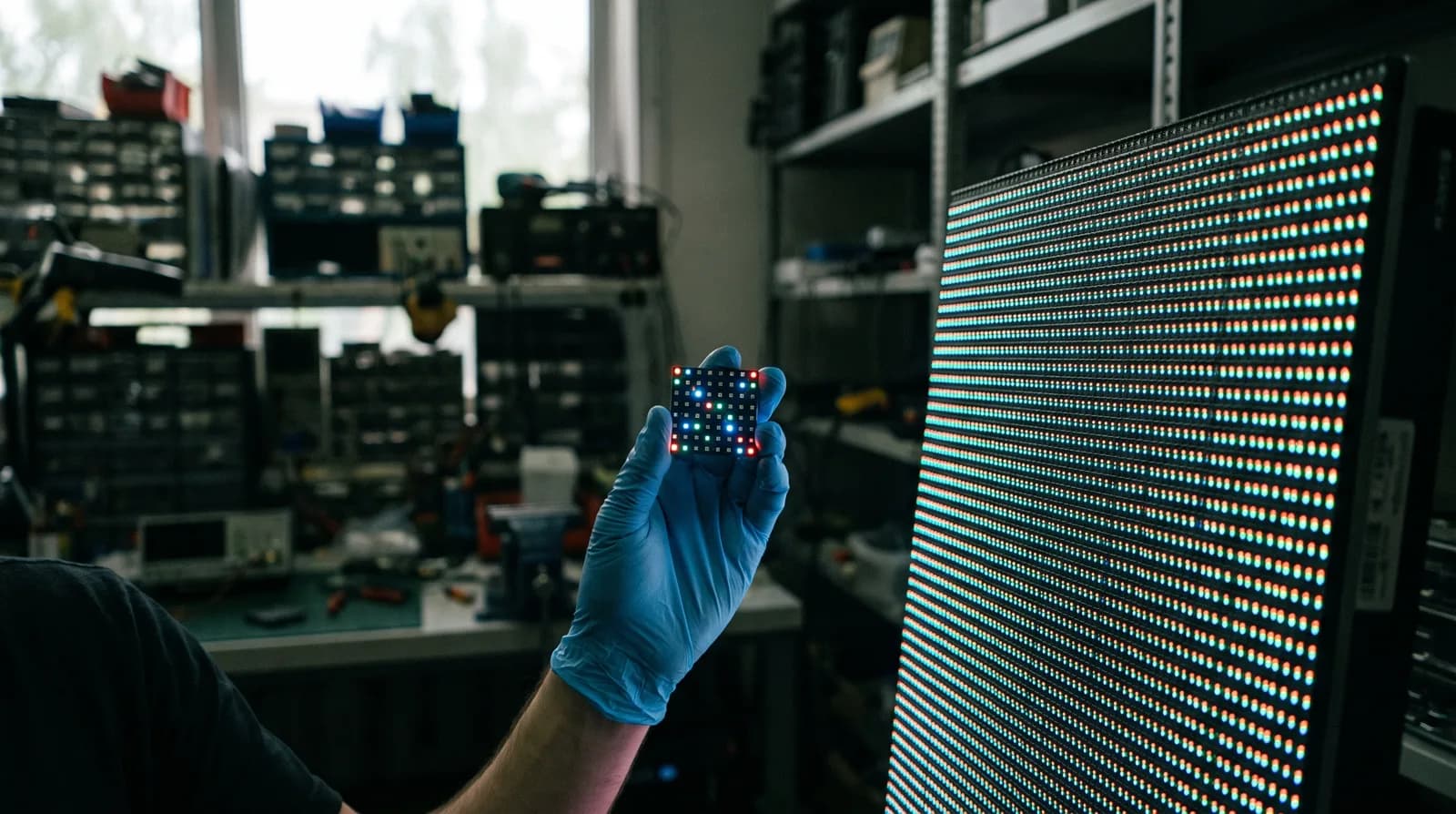
The beautiful render is the easy part. The real work is translating it into something that can be rigged, powered, and assembled on a load-in clock. We take the creative brief, prototype the geometry in the shop, and pre-build before the date so on-site assembly is fast and predictable. Flexible modules bend to a defined radius; the processing maps content across the whole shape so it reads as one surface, not a patchwork of panels.
Geometry that works
- Curved backdrops — concave wraps that pull the room into the content
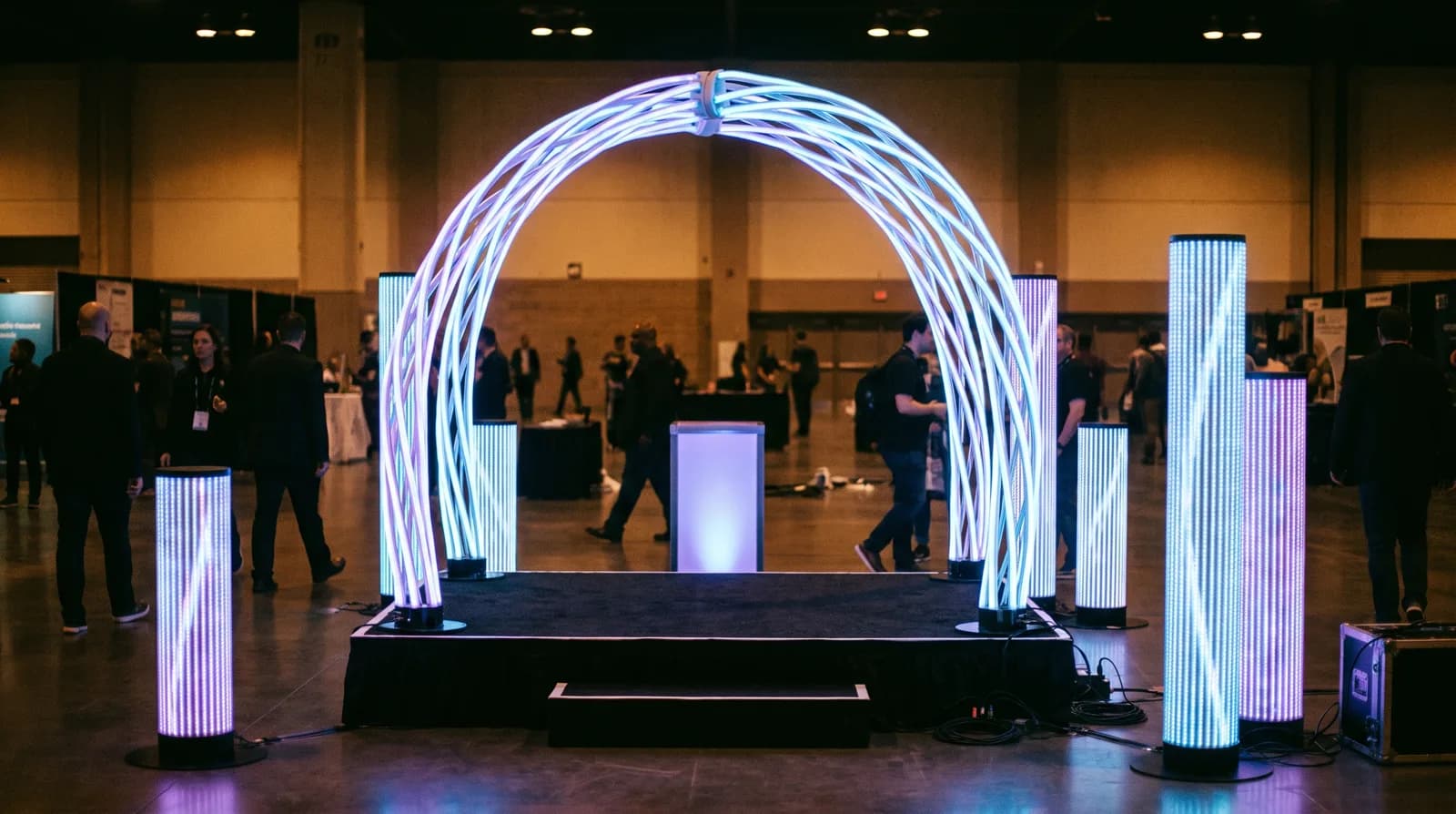
- Columns and arches — freestanding shapes that frame the stage
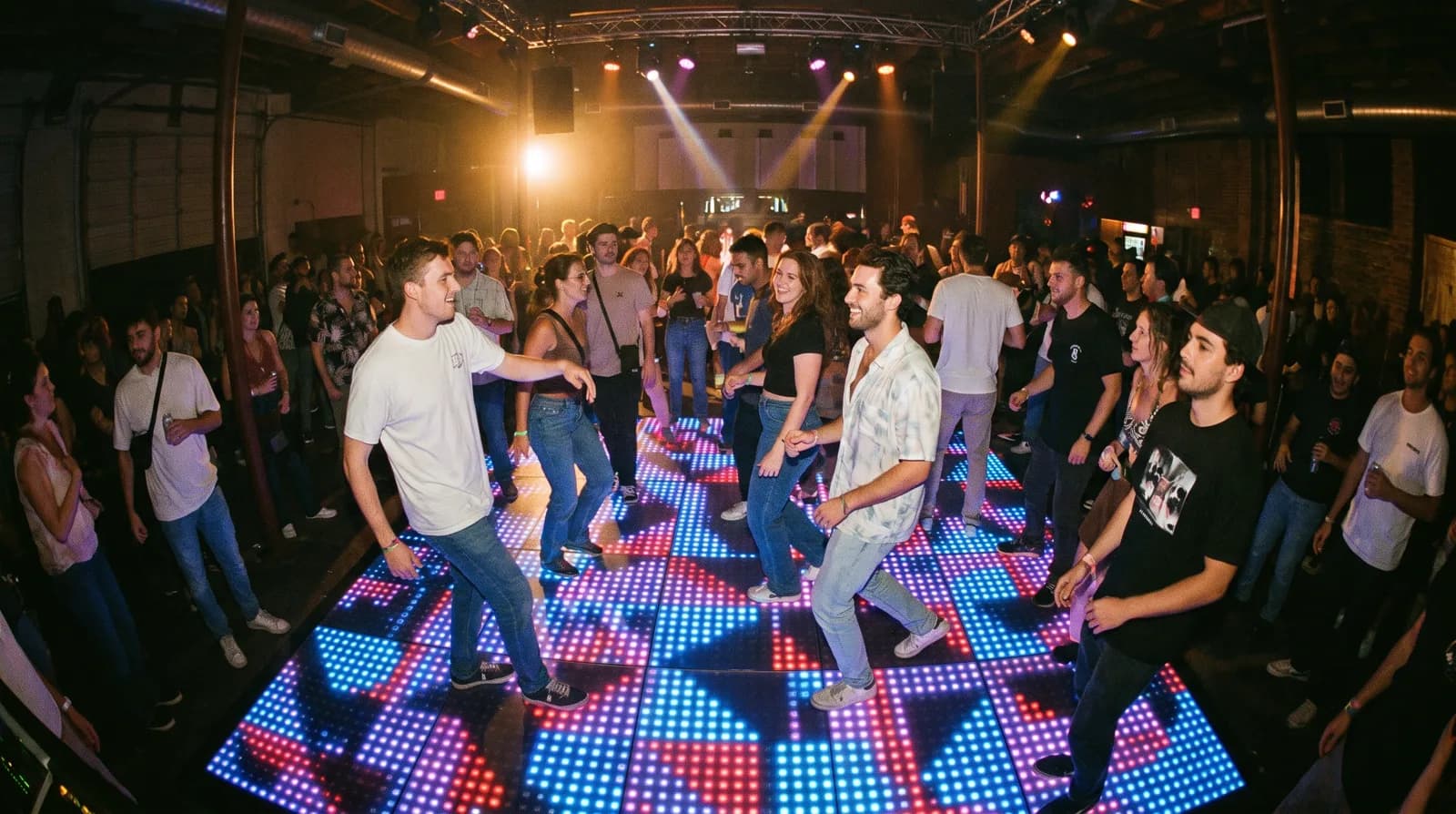
- LED floors and dance floors — pixel maps underfoot, content-mapped to the room
- Immersive volumes — walls plus floor for a fully wrapped environment
The hard part isn’t bending panels
It’s keeping a complex shape serviceable, powered, and on-content. Curves change how panels cool and cable; floors have to take weight and stay flat; a 360 volume has to hide its seams and its processing. We solve that on paper and in the shop first, so the only thing that happens on site is a clean build.
Still has to power on
A “how did they do that” moment still has to survive an eight-hour show. Every creative build gets the same standard as a straight wall — redundant processing, clean power, and an on-site tech through strike — because the most expensive failure is the one on the set everyone came to see.
Key takeaways
- Creative LED becomes the set — curves, columns, floors, and volumes, not just a backdrop.
- The work is render-to-build translation: prototype and pre-build in the shop, fast assembly on site.
- Custom geometry still needs straight-wall reliability: redundancy, clean power, on-site tech.