What Is a Jumbotron? Giant Event Screens, Explained
Leeor S.
Owner, Space Productions
5 min read
A jumbotron is a giant video screen — the kind you see at stadiums, concerts, and festivals. The word began as Sony’s brand name in 1985 and is now the everyday term for any huge display; at events today that almost always means a large LED wall or a mobile LED screen trailer, which typically rents for $3,000–$15,000 a day.
Key takeaways
- “Jumbotron” began as Sony’s 1985 brand name and is now the generic word for any giant screen — at events, usually a large LED wall or an LED screen trailer.
- Outdoor screens need 5,000+ nits, weather-rated panels, and a wind plan; outdoor pitches of about 3.9 mm and coarser are typical.
- LED screen trailers rent for about $3,000–$15,000 a day; built LED walls in LA start around $5,000, with most builds $8,000–$15,000 all-in.
In this article
Nobody books a “large-format outdoor LED display.” They book a jumbotron. The word does real work — it tells a vendor you want something big enough for a crowd to watch — but it covers several very different products. Here’s where the name came from, what it means for events now, and how to pick the right one.
Where the word “jumbotron” came from
Giant stadium video started in Los Angeles: Mitsubishi Electric demonstrated its Diamond Vision screen at the 1980 Major League Baseball All-Star Game at Dodger Stadium. In 1985, Sony introduced its own giant screen at the Expo ’85 world’s fair in Tsukuba, Japan, under the name JumboTron. Those early screens weren’t LED at all — they were built from small cathode-ray tubes, and the 1985 original had about 450,000 pixels. Sony stopped making screens under the JumboTron name in 2001, and the word has been a generic term for any giant screen ever since.
What a jumbotron means at events today
| Type | What it is | Best for |
|---|---|---|
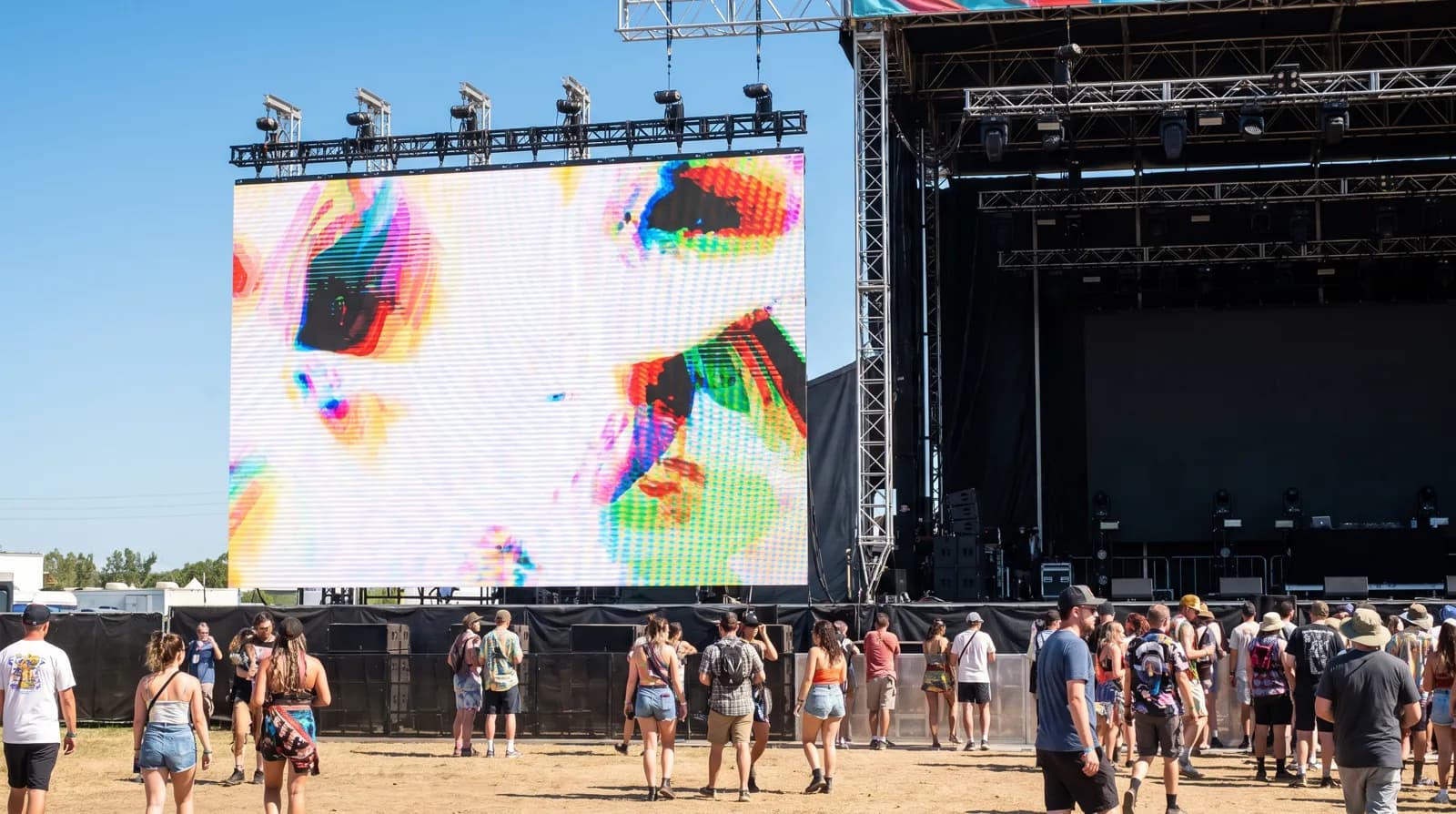
| Mobile LED screen trailer | A self-contained outdoor LED screen on a trailer that drives in, lifts, and plays | Parking lots, watch parties, city events, fast outdoor setups |
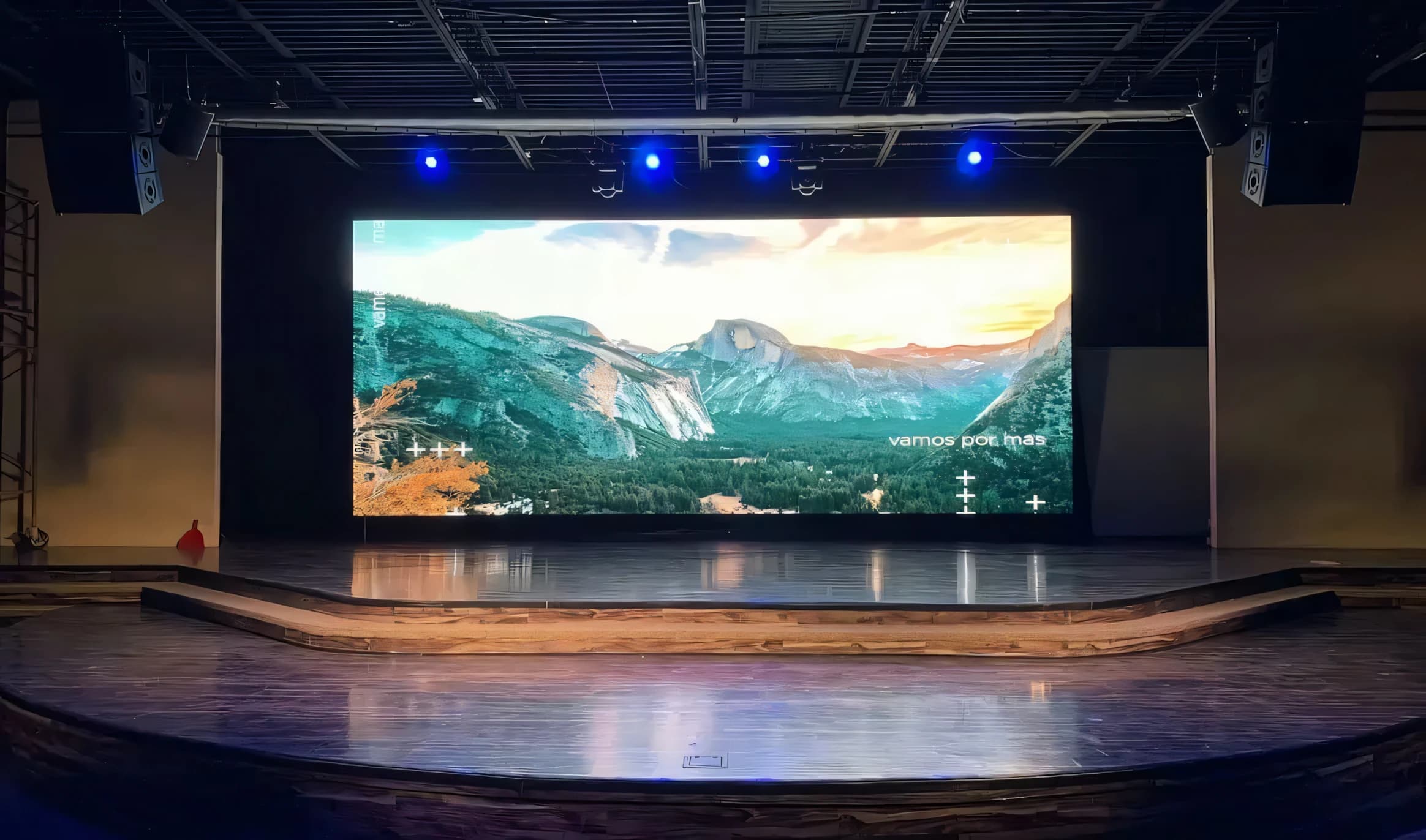
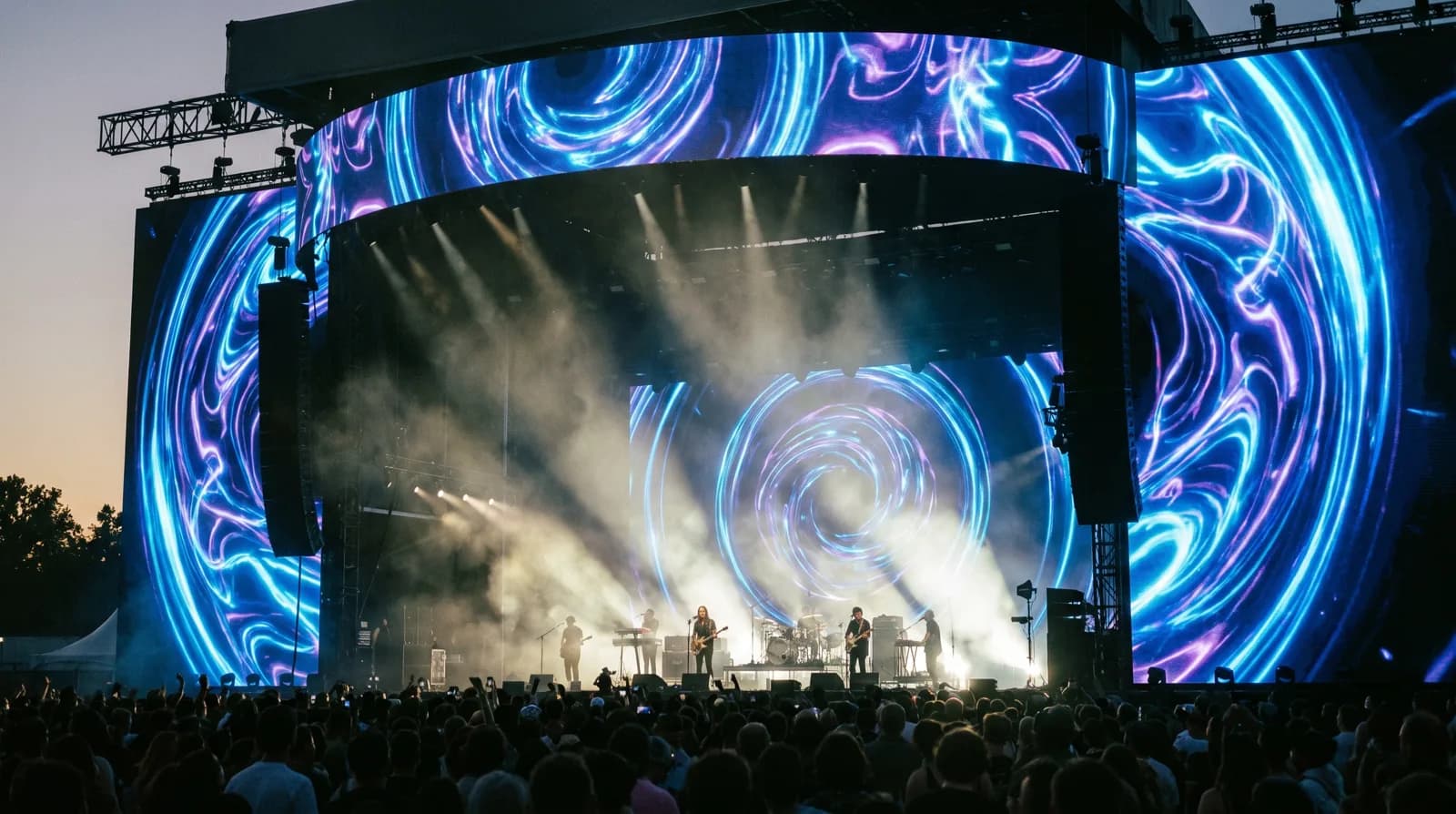
| Built LED wall | Modular LED panels on ground support or a flown rig, sized to the stage | Concerts, festivals, and main stages where the screen is part of the set |
| IMAG side screens | A pair of large screens beside the stage showing live camera close-ups | Keynotes, concerts, and any crowd too big to see the stage |
| Stadium video board | A permanently installed scoreboard display | Sports venues — fixed, not rented |
The specs that matter outdoors
- Brightness — 5,000 nits or more to hold up in daylight; most outdoor rental panels run around 5,500–7,000
- Pixel pitch — outdoor crowds stand back, so about 3.9 mm and coarser is typical; see what is pixel pitch
- Weather rating — IP65-rated panels, plus a rigging plan engineered for wind
- Size — trailer screens commonly run about 9 to 27 feet wide; built walls are sized to the stage
- Power — a generator or a dedicated feed; there’s rarely a house panel in a field
What does a jumbotron cost to rent?
A mobile LED screen trailer typically rents for $3,000–$15,000 a day, depending on screen size. A full-service LED wall in Los Angeles starts around $5,000, most builds land $8,000–$15,000 all-in, and large custom or multi-day builds run $25,000–$70,000 or more. The full breakdown is in LED wall rental cost.
Trailer or built wall?
A trailer is the quick answer for a parking lot, a watch party, or a single-day outdoor event: it arrives self-contained and plays. A built wall costs more, but it can be sized in panel increments, run a tighter pitch, sit on the stage structure, and become part of the set rather than parking beside it. See giant LED walls and outdoor LED.
How we build giant screens
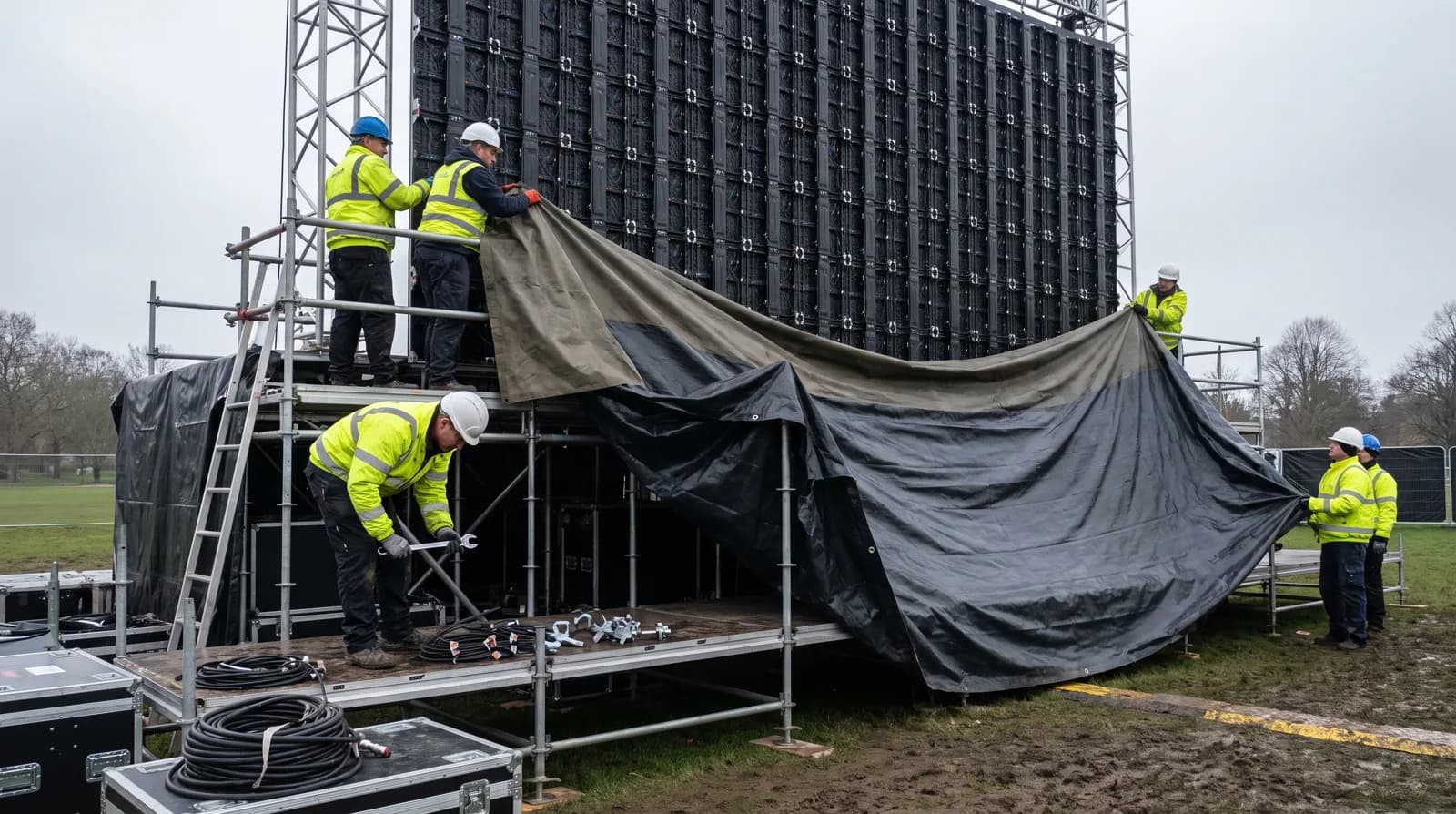
For festival and outdoor stages we build daylight-readable walls at 5,000+ nits, weather-ready and rigged for wind load, sized to the main stage and the crowd — flown or ground-supported. At that scale you’re buying engineering, structure, and power alongside the panels, and the quote itemizes each: the span, the steel, the generators, the crew. Send us the site and the date.
Frequently asked questions
What is a jumbotron?
A giant video screen of the kind used at stadiums, concerts, and festivals. The name began as Sony’s JumboTron brand in 1985 and is now a generic term; at events it usually means a large LED wall or a mobile LED screen trailer.
Where did the word jumbotron come from?
Sony coined JumboTron for the giant screen it introduced at the Expo ’85 world’s fair in Tsukuba, Japan. Mitsubishi had demonstrated an earlier giant screen, Diamond Vision, at the 1980 MLB All-Star Game at Dodger Stadium in Los Angeles. Sony stopped using the name in 2001, and it became a generic term.
How much does it cost to rent a jumbotron?
A mobile LED screen trailer typically rents for $3,000–$15,000 a day, depending on size. A full-service built LED wall in Los Angeles starts around $5,000, with most builds landing $8,000–$15,000 all-in.
How bright does an outdoor jumbotron need to be?
At least 5,000 nits to stay readable in daylight; most outdoor rental panels run around 5,500–7,000 nits, with auto-dimming after dark.
Is a jumbotron the same as an LED wall?
Today, usually yes. Modern jumbotrons are built from LED panels; “jumbotron” is simply the everyday word for a very large one, especially outdoors.
What size jumbotron do I need?
Size it to the crowd and the distance: the farthest viewers need to read the content, and the closest shouldn’t see the pixel grid. Trailer screens commonly run about 9 to 27 feet wide; built walls are sized to the stage.
Planning an event in LA?
Get a clear, itemized quote.
Tell us the venue, the date, and the scope. We’ll spec the LED, lighting, and audio to your room — with an on-site crew through strike.
Get Your Quote or call (323) 974-54735.0 · 300+ Google reviews