LED Wall vs. Projector: Which Is Right for Your Event?
Leeor S.
Owner, Space Productions
5 min read
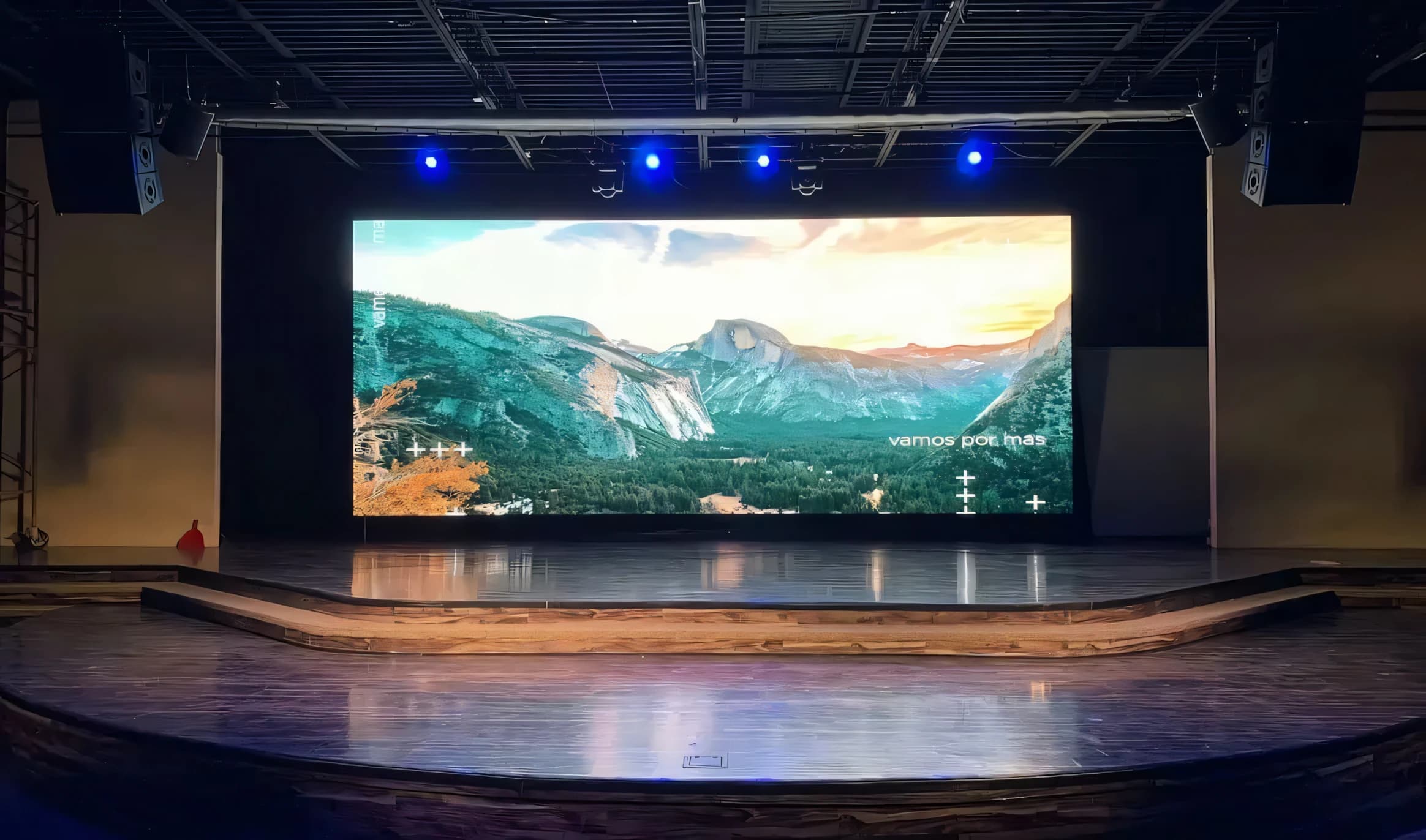
Choose an LED wall when the room is bright, the show is on camera, or you need a huge, seamless image with nothing casting shadows. Choose projection when the room can go dark, the budget is tight, or you’re mapping onto something that isn’t a screen. Indoors, an LED wall runs about 800–1,500 nits — several times what even a 20,000-lumen projector can put on a large screen.
Key takeaways
- Pick LED for bright rooms, daylight, cameras, and huge seamless images; pick projection for dark rooms, tight budgets, and surfaces that aren’t screens.
- Indoor LED runs 800–1,500 nits — several times what a 20,000-lumen projector puts on a 16-foot screen.
- Full-service LED walls in LA start around $5,000; projector-and-screen packages start in the hundreds.
In this article
Both put a picture behind your speaker, and on a rendering they look the same. In the room they behave very differently — in brightness, on camera, in setup, and in price. Here’s the side-by-side, and how to call it for your event.
LED wall vs. projector at a glance
| Factor | LED wall | Projector and screen |
|---|---|---|
| Brightness | 800–1,500 nits indoors; 5,000+ outdoors | A few hundred nits on a large screen, in a dark room |
| Contrast | True black — pixels switch off | Only as dark as the room |
| Bright rooms and daylight | Holds up; high-bright panels work in sun | Washes out; not usable in daylight |
| On camera | Punchy on IMAG and streams; pitch and camera settings avoid moiré | No moiré, but reads flat unless the room is dark |
| Shadows and throw | None — the wall is the light source | Needs a clear throw; front projection lands on presenters |
| Size and shape | Any size in panel increments; curves and columns | Limited by brightness; can map onto any surface |
| Setup | Panels, processing, rigging or ground support, power | Lighter and faster: projector, screen, stand or rigging |
| Typical cost (2026) | Full-service in LA from about $5,000; most $8,000–$15,000 all-in | Projector-and-screen packages about $550–$2,600; large-venue projectors about $400–$2,500 a day |
Brightness: nits vs. lumens
LED walls are rated in nits — light coming off the screen. Projectors are rated in lumens — light leaving the lens — and a screen only shows a fraction of that once it spreads across the surface. A 20,000-lumen projector filling a 16×9-foot screen works out to roughly 475 nits of peak white in theory, before any house light lands on the screen; a 10,000-lumen projector, about half that. An indoor LED wall sits at 800–1,500 nits and usually gets dialed down.
That’s why projection wants a dark room. A ballroom with the house lights up throws enough light on a screen to wash out all but the biggest projectors; for screens 16 to 24 feet wide, planners typically need 14,000–20,000 lumens.
When an LED wall is the right call
- The room can’t go dark — daytime sessions, windows, bright stage lighting
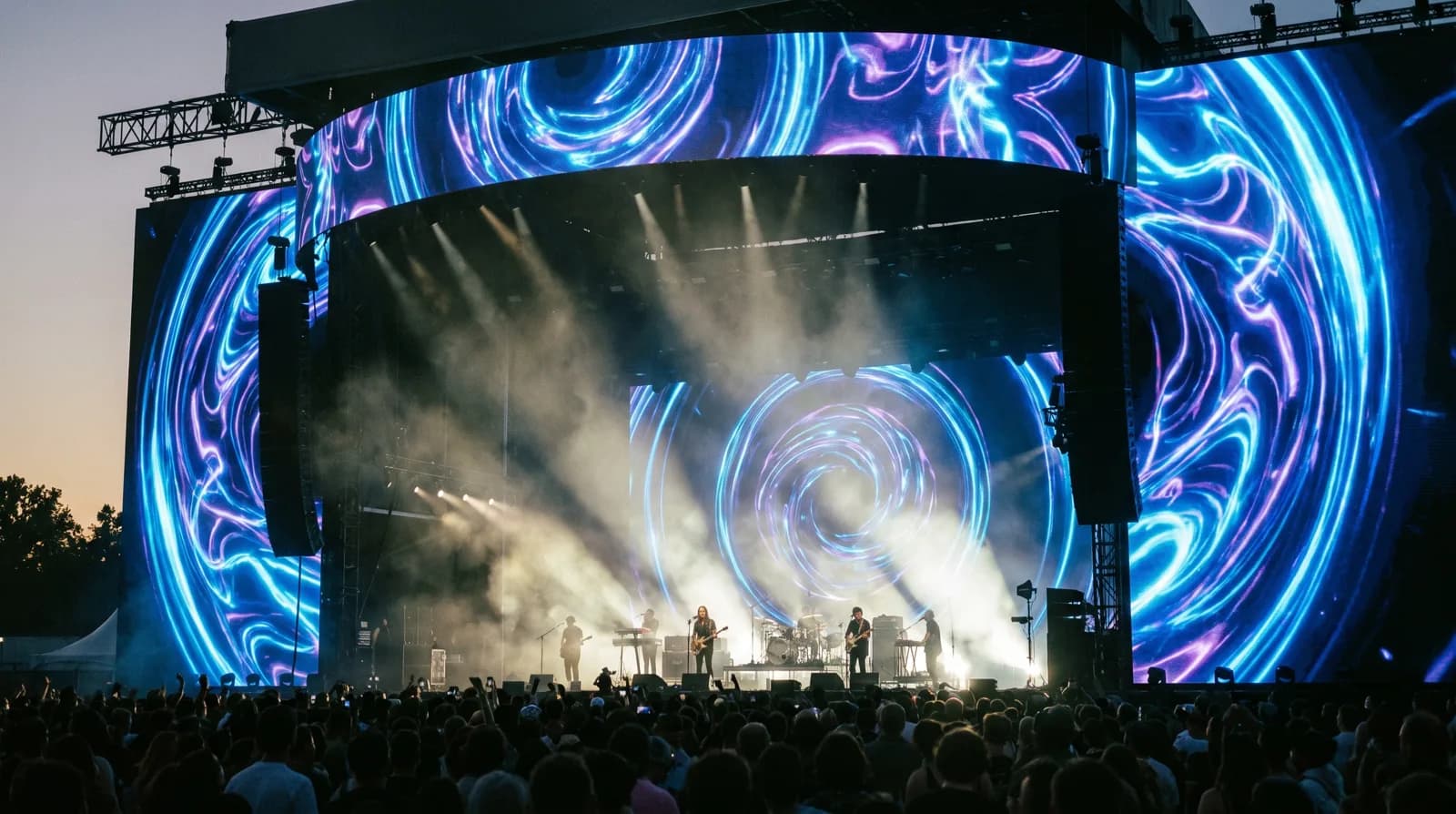
- It’s on camera: IMAG, a livestream, or a broadcast
- You need a very large or seamless image, or a curved or shaped one
- Presenters will walk in front of the screen
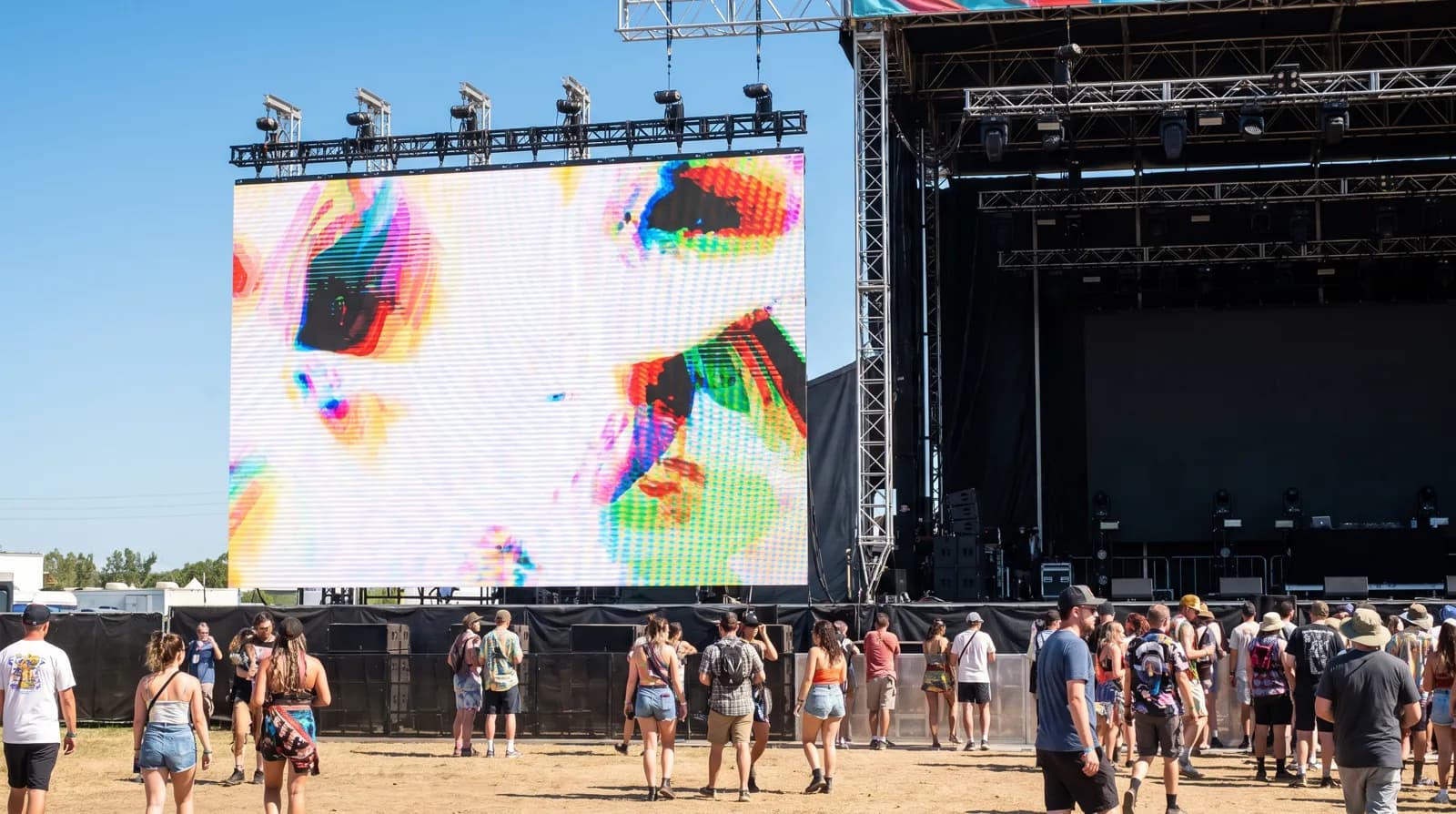
- It’s outdoors in daylight — see outdoor LED walls
When projection is the smarter call
- The room can go properly dark
- Breakouts and smaller rooms, where a projector and screen do the job
- The budget is tight and the image is modest in size
- The surface isn’t a screen — architecture, scenic, or a sculpture — which is projection mapping
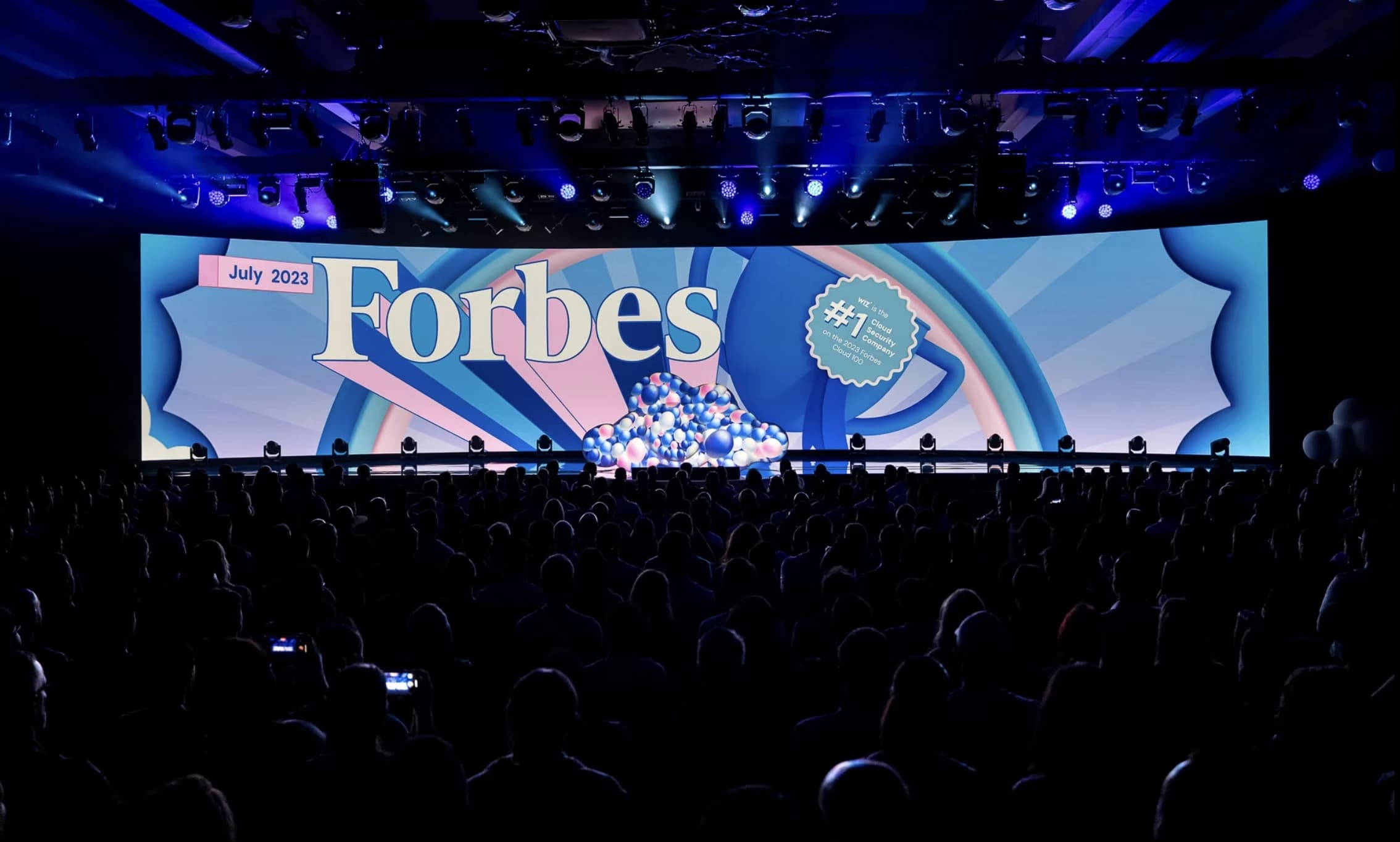
What about projection mapping?
Mapping is projection’s superpower: content warped and masked to fit a building, a stage set, or a 3D object so it looks built-in rather than bolted on (how projection mapping works). When the surface is architecture or a shape a screen can’t be, and you control the light, projection wins outright. For flat rectangles, bright rooms, and daylight, LED does.
Can you mix them?
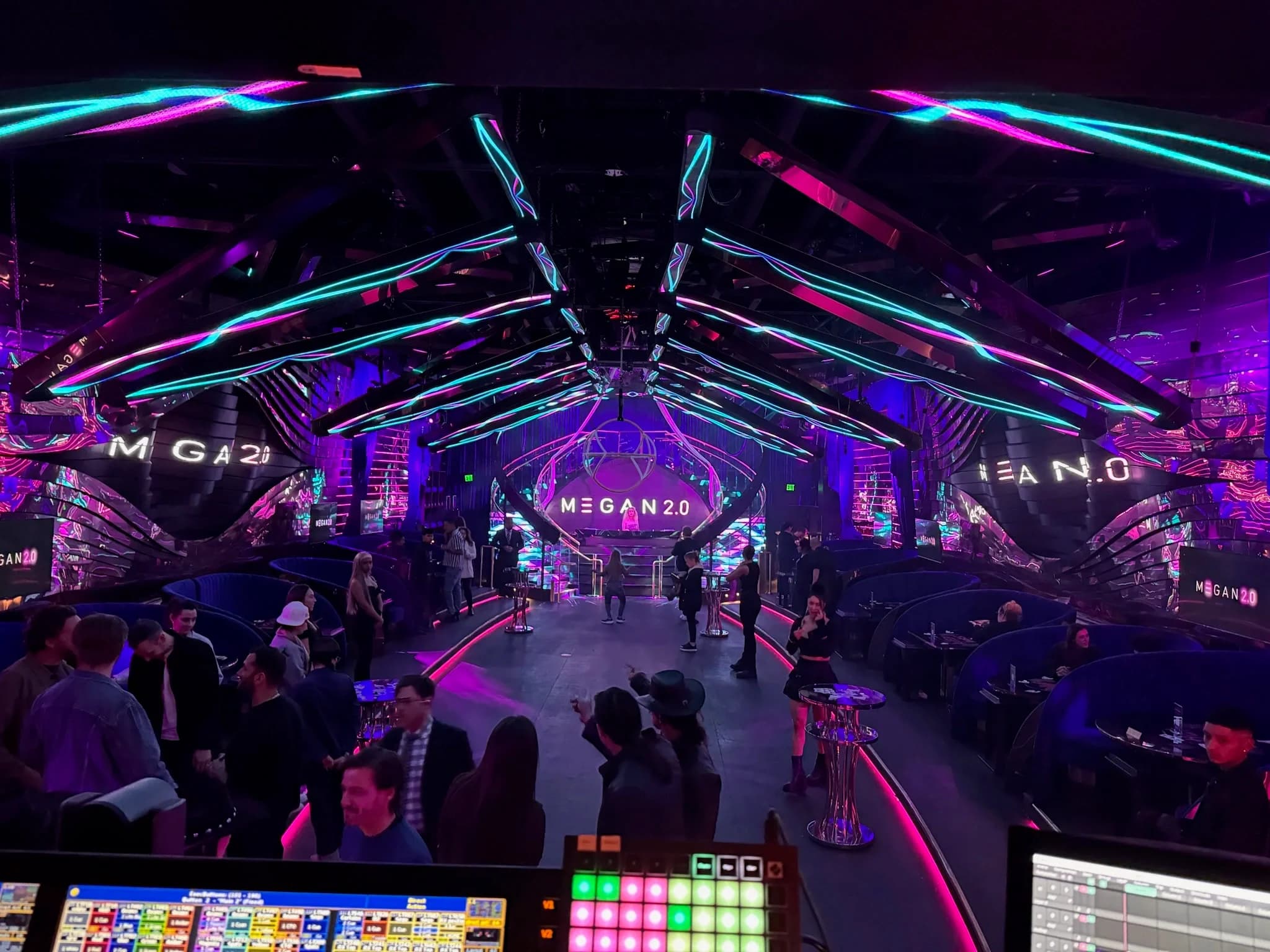
Often the best answer is both: an LED wall for the main stage and the cameras, projectors or TVs in the breakouts, and mapping for one reveal moment. Put the budget where the audience’s attention — and the camera — is.
How we call it
We do both, so we’ll tell you straight. Send a photo of the room or the surface, the date, and whether the event is on camera, and we’ll call it. See LED video walls and projection mapping, or send us the venue and the date. If LED wins, what pixel pitch means is the next thing to read.
Frequently asked questions
Is an LED wall better than a projector?
Better in bright rooms, in daylight, and on camera, and for very large seamless images. Projection is better when the room can go dark, the budget is tight, or the surface isn’t a screen. Many events use both.
Why are LED walls more expensive than projectors?
An LED wall is many panels plus video processing, rigging or ground support, power, and a technician; a projector is one device and a screen. Full-service LED walls in Los Angeles start around $5,000, while projector-and-screen packages start in the hundreds of dollars.
How bright is an LED wall compared with a projector?
Indoor LED walls run about 800–1,500 nits. A 20,000-lumen projector filling a 16×9-foot screen delivers roughly 475 nits of peak white in theory — less once house light reaches the screen.
Can you use a projector outdoors?
After dark, yes, with enough lumens for the screen size. In daylight, no: the sun overwhelms any projected image, which is why daytime outdoor events use high-brightness LED walls.
How many lumens does a projector need for an event?
It depends on the screen size and how dark the room gets. For screens 16 to 24 feet wide in a ballroom, plan on roughly 14,000–20,000 lumens, and more if the house lights stay up.
Do LED walls look better on camera than projection?
Usually, because they are brighter and have true blacks. Match the pixel pitch and the camera settings to avoid moiré, the shimmer that appears when the camera’s sensor and the LED grid interfere.
Planning an event in LA?
Get a clear, itemized quote.
Tell us the venue, the date, and the scope. We’ll spec the LED, lighting, and audio to your room — with an on-site crew through strike.
Get Your Quote or call (323) 974-54735.0 · 300+ Google reviews