Stage Lighting Design for Events: A Planner’s Guide
Leeor S.
Owner, Space Productions
6 min read
Stage lighting design is the plan for where every light goes, what it does, and when it changes — so the people on stage read clearly in the room and on camera, and every moment looks intended. For events it comes down to four layers (key, wash, back, and effects), a lighting plot, and a cue list programmed before doors.
Key takeaways
- Stage lighting design is four layers — key, wash, back, and effects — drawn on a lighting plot and programmed as cues before doors.
- If there’s a camera, design for it: key and back light set to camera exposure at rehearsal, and the LED wall balanced against faces.
- Match the look to the event: camera-first for keynotes, warm and rich for galas, programmed energy for concerts.
In this article
Most people only notice stage lighting when it’s wrong: a presenter in shadow, a singer lost against a bright LED wall, a big moment that lands in the same flat light as everything else. Design is how you avoid that. Here’s what goes into it, in the order a lighting designer actually works.
The four layers of stage lighting
| Layer | What it does | Typical fixtures |
|---|---|---|
| Key (front) light | Makes faces readable in the room and on camera | Profile spots and soft LED fixtures from the front |
| Wash | Fills and colors the stage evenly | LED wash lights and pars |
| Back and rim light | Separates people from the background and adds depth | Washes and spots from behind and above |
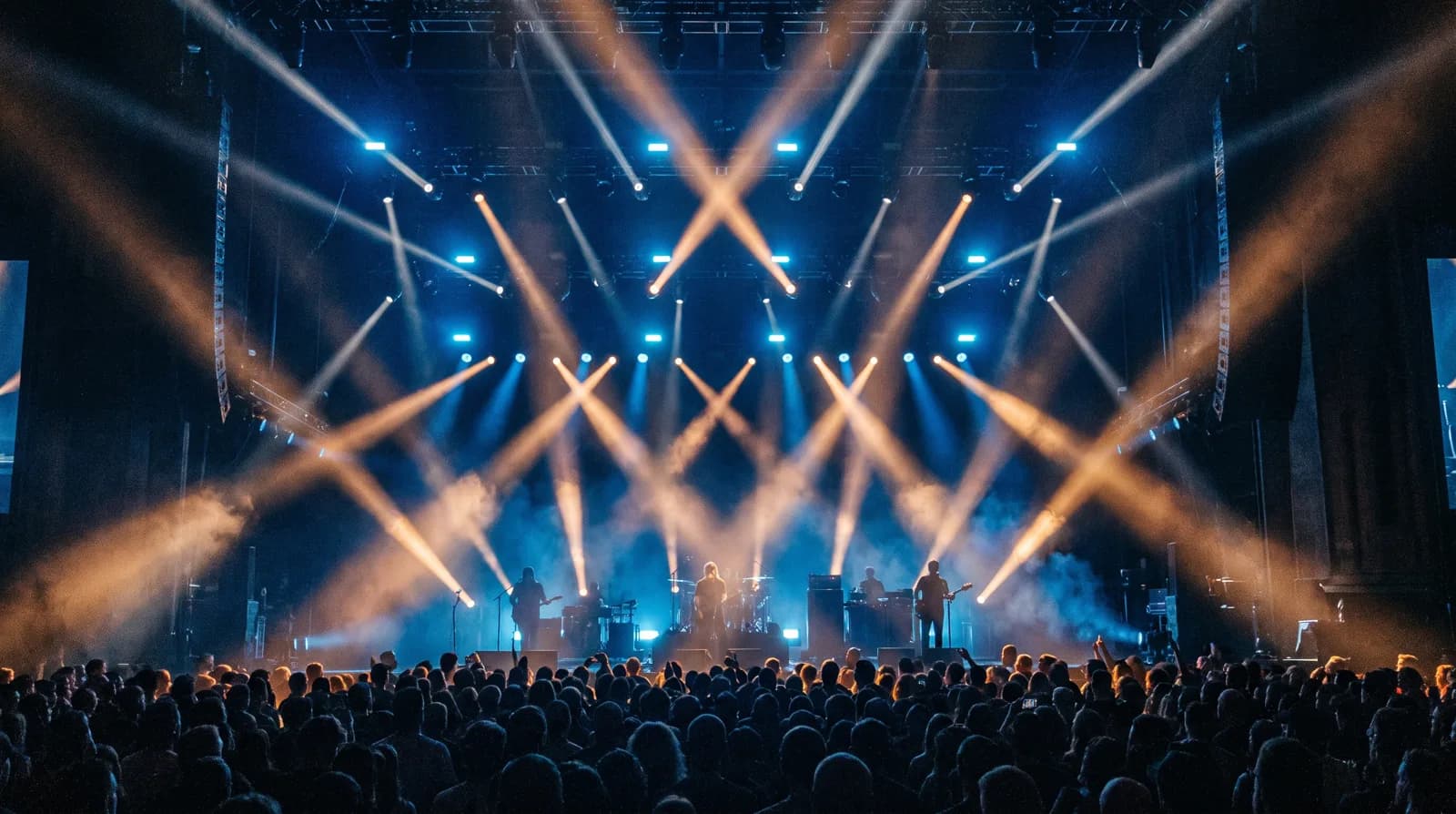
| Effects | Movement, texture, and energy for the big moments | Moving heads, beams, strobes, LED bars, haze |
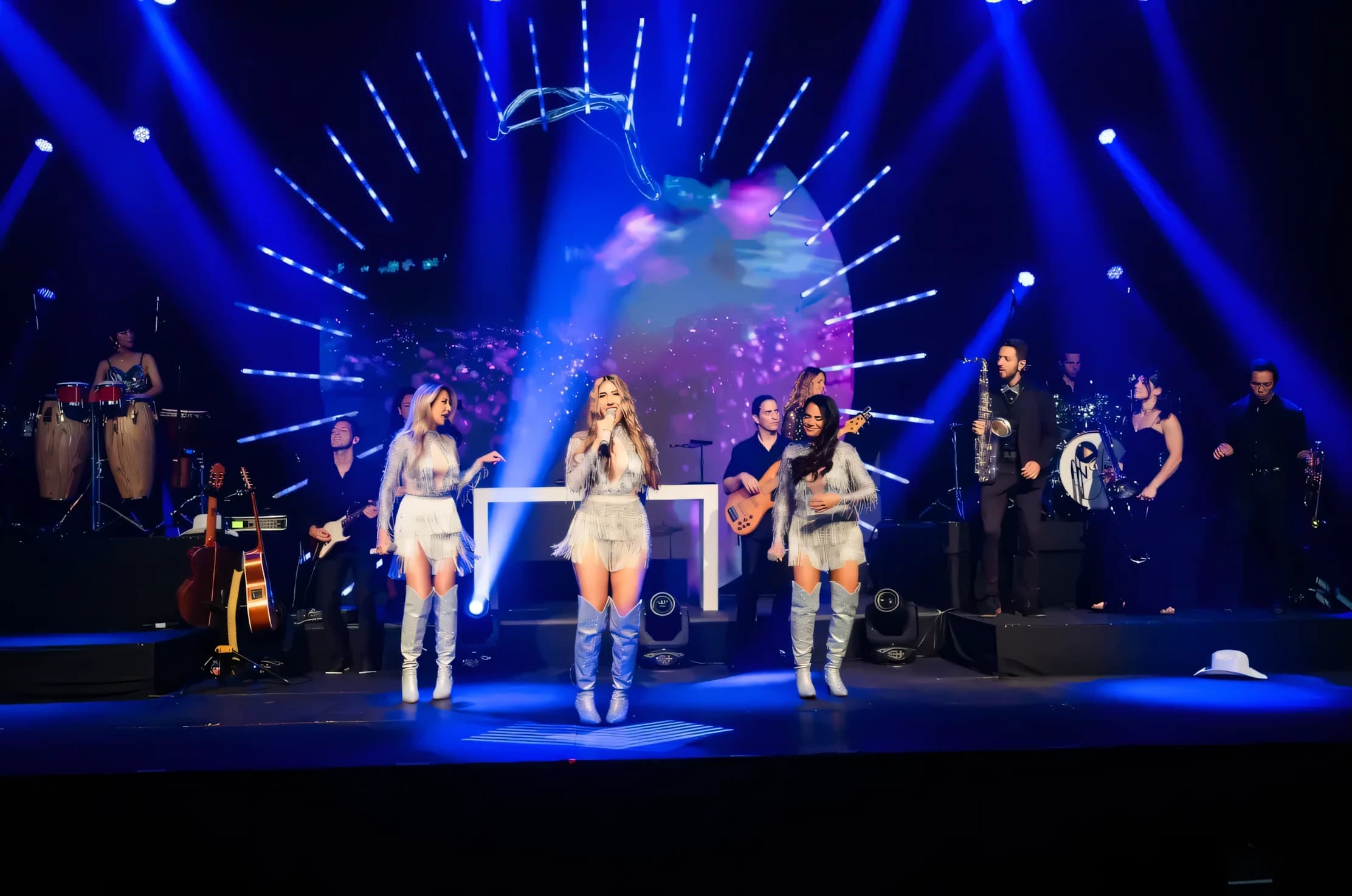
The layers work together. Key light alone looks flat; wash alone leaves faces muddy; back light is what stops a presenter from disappearing into the LED wall behind them; and effects are the seasoning, not the meal.
Stage lighting fixtures, briefly
- Profile (ellipsoidal) spots — hard-edged, shapeable beams for key light and gobo patterns
- Fresnels and soft LED panels — soft-edged light that flatters faces
- Wash lights and pars — broad, even color across the stage
- Moving heads — spot, wash, and beam fixtures that pan, tilt, and change color on cue
- Strobes and LED bars — punctuation for drops, reveals, and walk-ups
- Followspots — an operator-driven light that tracks one person
- Haze — the atmosphere that makes beams visible in the air
How a stage lighting design comes together
- The brief and the run of show — what happens on stage, minute by minute
- A site survey — rigging points, power, sightlines, and camera positions
- The lighting plot — a scale drawing of every fixture, where it hangs, and what it’s for
- Programming — looks built on the console and timed to the content and music before doors, often pre-visualized in 3D for big shows
- Focus and rehearsal — every fixture aimed, every cue run with the talent
- The show — an operator runs the cues live
Locked shows can run on timecode so every look lands on the exact frame; looser sets get busked live by an operator who knows the music. Most concerts use both across a night.
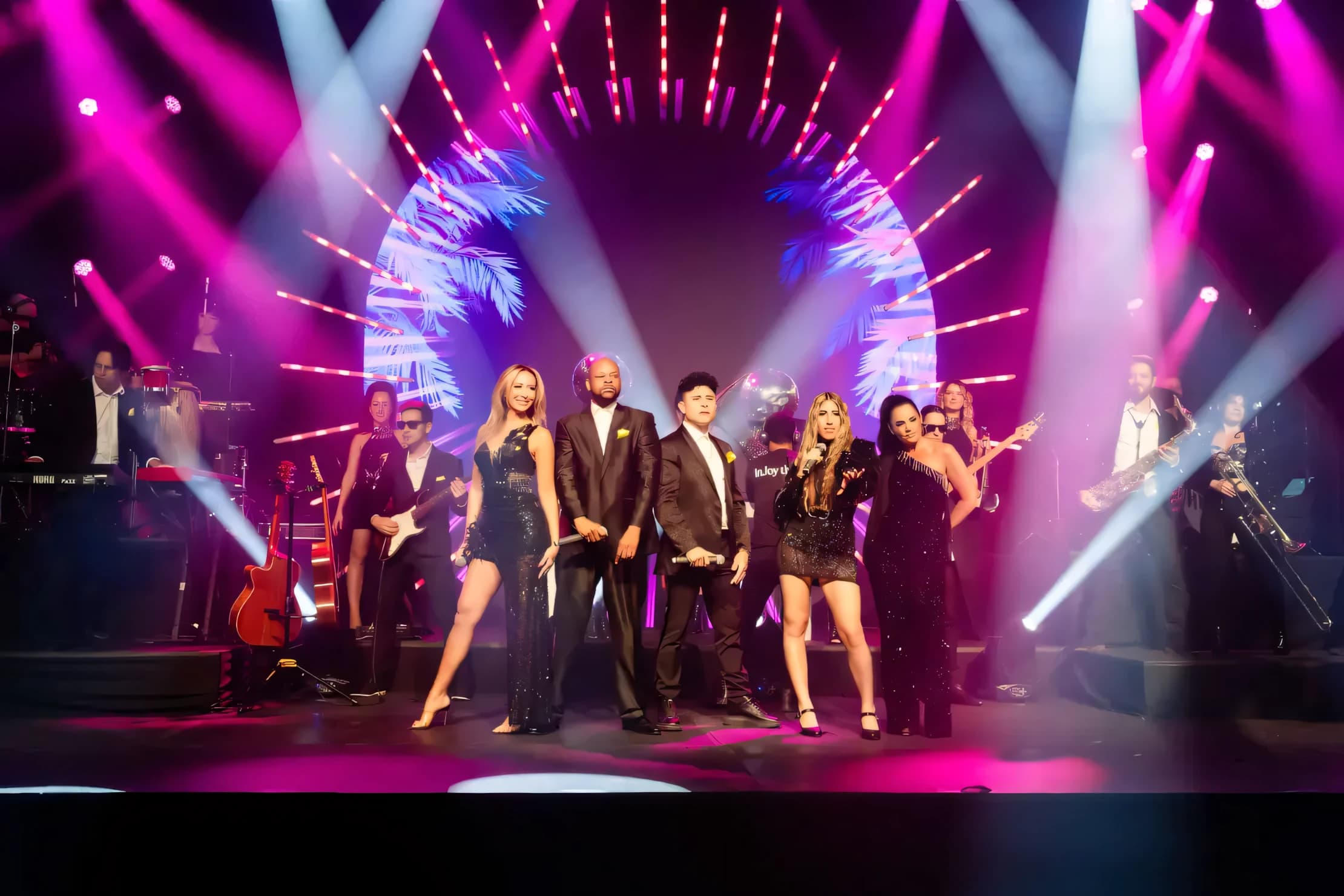
Designing for camera
If the show is on IMAG screens, streamed, or filmed, the camera is the most important audience member. Key and back light get set to camera exposure at rehearsal so faces read clean instead of blown out or silhouetted, color temperature stays consistent across the stage, and the LED wall is balanced so it doesn’t overpower the people standing in front of it.
Stage lighting ideas by event type
| Event | The look | Design note |
|---|---|---|
| Keynote or conference | Even, neutral key light; brand colors on the scenic | Camera first — restrained effects |
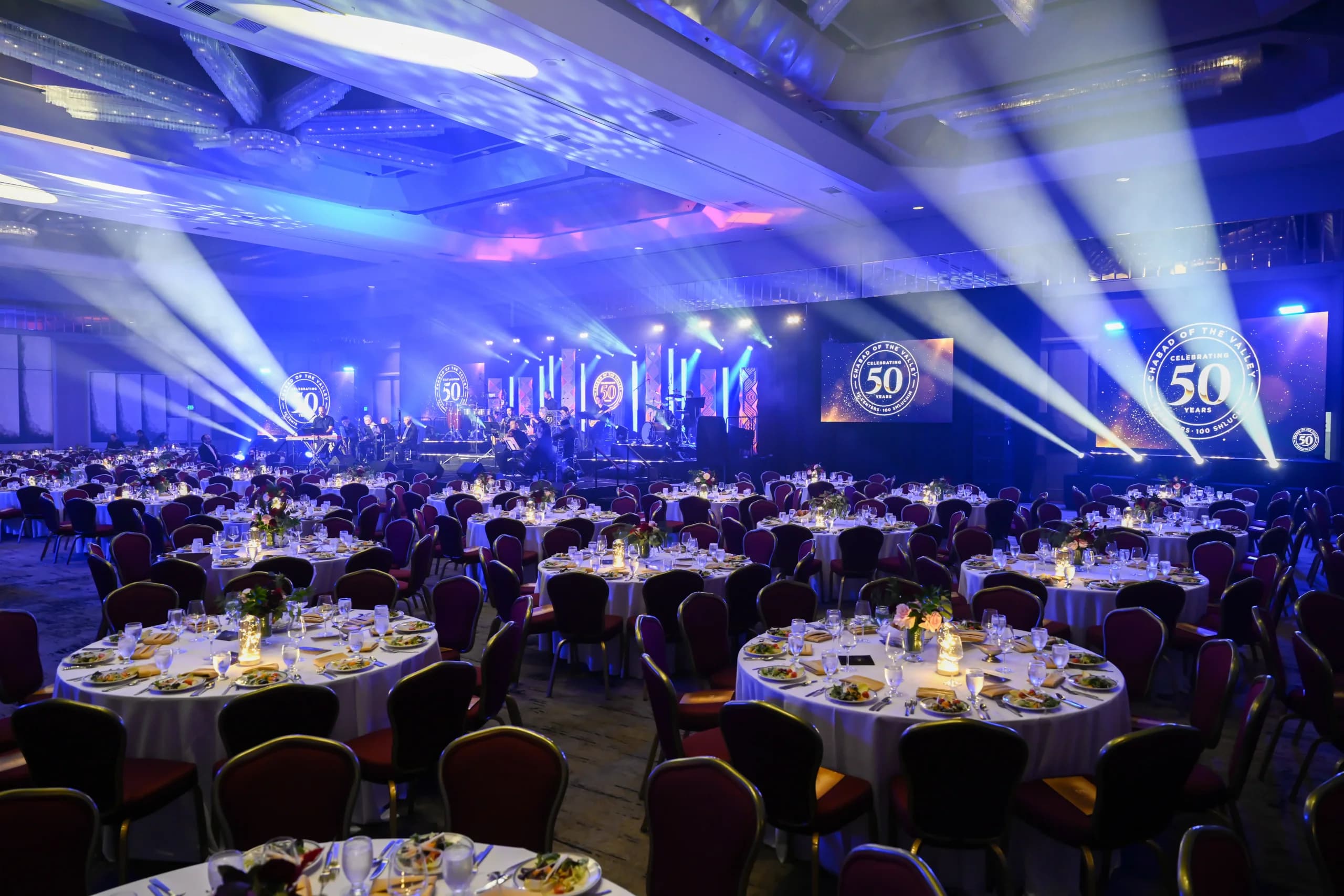
| Gala or awards show | Warm key, rich color washes, specials on the podium | Walk-up and winner cues tied to the run of show |
| Product launch | Blackout to reveal, a special on the product, LED and lighting in sync | The reveal cue gets rehearsed until it’s boring |
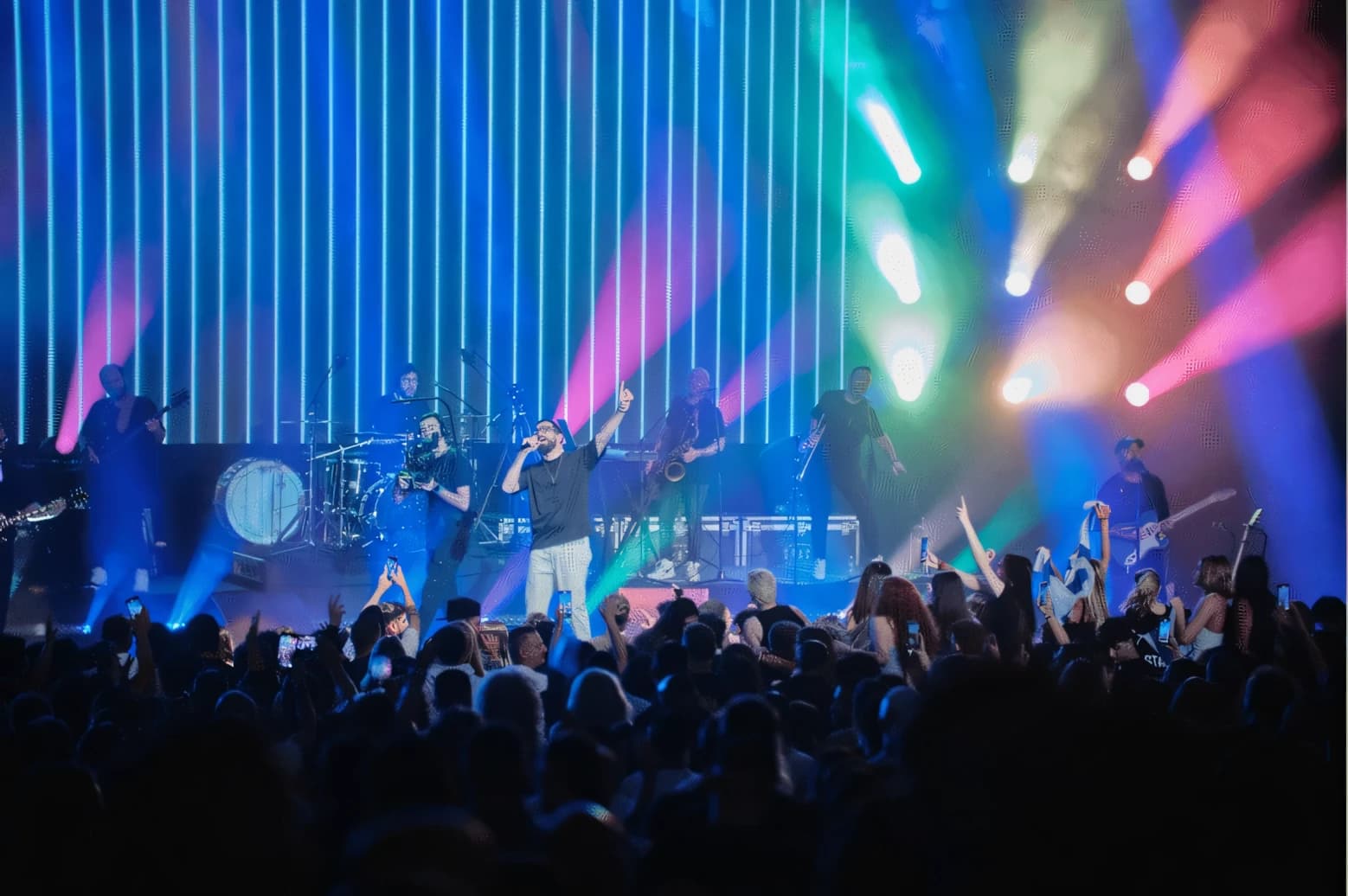
| Concert | Moving heads, beams, haze, and strobes | Programmed to the setlist, busked where the band improvises |
| Wedding or private event | Uplighting, pinspots, and a dance-floor look | Room first — see wedding lighting |
Why a lighting plot matters
The plot is the contract between the design and the building. It shows where every fixture hangs, what it’s pointed at, and how it’s powered and controlled — and it’s drawn around the stage and the LED so everything lands where the drawing said it would. Whether the rig flies from the venue’s rated points or stands on ground-supported truss, the site survey decides before the design is final.
What it costs
Fixture count and class, rig position, programming time, and show length drive the price — moving heads cost more than static wash, and flown truss more than ground support. For 2026 ranges by event type, see event lighting cost in Los Angeles.
How we design stage lighting
Every design is built to your room and run of show, pre-programmed on a professional console, and run live by an operator who is part of every quote. Haze gets cleared with the venue’s fire-panel process in advance, so it’s never a show-day gamble. See stage and concert lighting and how lighting lands on cue, or send us the venue and the run of show.
Frequently asked questions
What is stage lighting design?
The plan for where every light on a stage goes, what it does, and when it changes: the fixture choices, the lighting plot, the looks, and the cue list that runs them through the show.
What are the basic types of stage lighting?
Key or front light for faces, wash light to fill and color the stage, back and rim light for depth and separation, and effects — moving heads, beams, strobes, and haze — for movement and energy.
What is a lighting plot?
A scale drawing of every lighting fixture: where it hangs, what it’s aimed at, and how it’s powered and controlled. It’s coordinated with the stage and LED plans so everything lands where the drawing says.
What is the difference between a spot and a wash light?
A spot throws a tight, hard-edged beam you can shape and aim at one place; a wash throws a broad, soft-edged field of light to cover and color an area evenly.
Why do concerts use haze?
Haze is a fine atmosphere that catches light, so beams become visible in the air instead of only landing on surfaces. It has to be cleared with the venue’s fire-alarm process in advance.
How far ahead should stage lighting be designed?
Four to six weeks is comfortable for most shows; large rigs and peak season — October through December, plus wedding season — book earlier.
Planning an event in LA?
Get a clear, itemized quote.
Tell us the venue, the date, and the scope. We’ll spec the LED, lighting, and audio to your room — with an on-site crew through strike.
Get Your Quote or call (323) 974-54735.0 · 300+ Google reviews