Know what you’re asking for
Audio quotes are hard to compare because the vocabulary is unfamiliar and the differences are invisible on paper. Here’s the language, so you can tell what a New York bid actually includes. Everything below is gear we own, tune, and mix ourselves — with an engineer on the desk, not a system left running unattended.
Main systemLine array
Vertically stacked speaker elements that behave as one tall source, throwing evenly from front to back.
Ask for it when: Long or large rooms, and anywhere the back row matters as much as the front. Overkill in a small ballroom.
Main systemPoint-source speaker
A single conventional cabinet covering a defined area.
Ask for it when: Most corporate rooms. Cheaper, quicker to deploy, and genuinely the right answer more often than vendors admit.
Low endSubwoofer
A cabinet handling the low frequencies the main speakers can’t reproduce.
Ask for it when: Music of any kind. Rarely needed for speech-only, and it’s the first thing to cut when there’s a noise limit.
CoverageDelay position
Additional speakers further back, time-aligned so their sound arrives with the main system rather than as an echo.
Ask for it when: Deep rooms and outdoor sites. This — not more volume — is how the back of a room gets intelligible speech.
CoverageFront fill
Small speakers along the stage edge covering the first few rows, which the mains fire over.
Ask for it when: Any raised system. Without it your VIP front tables are the worst seats in the room.
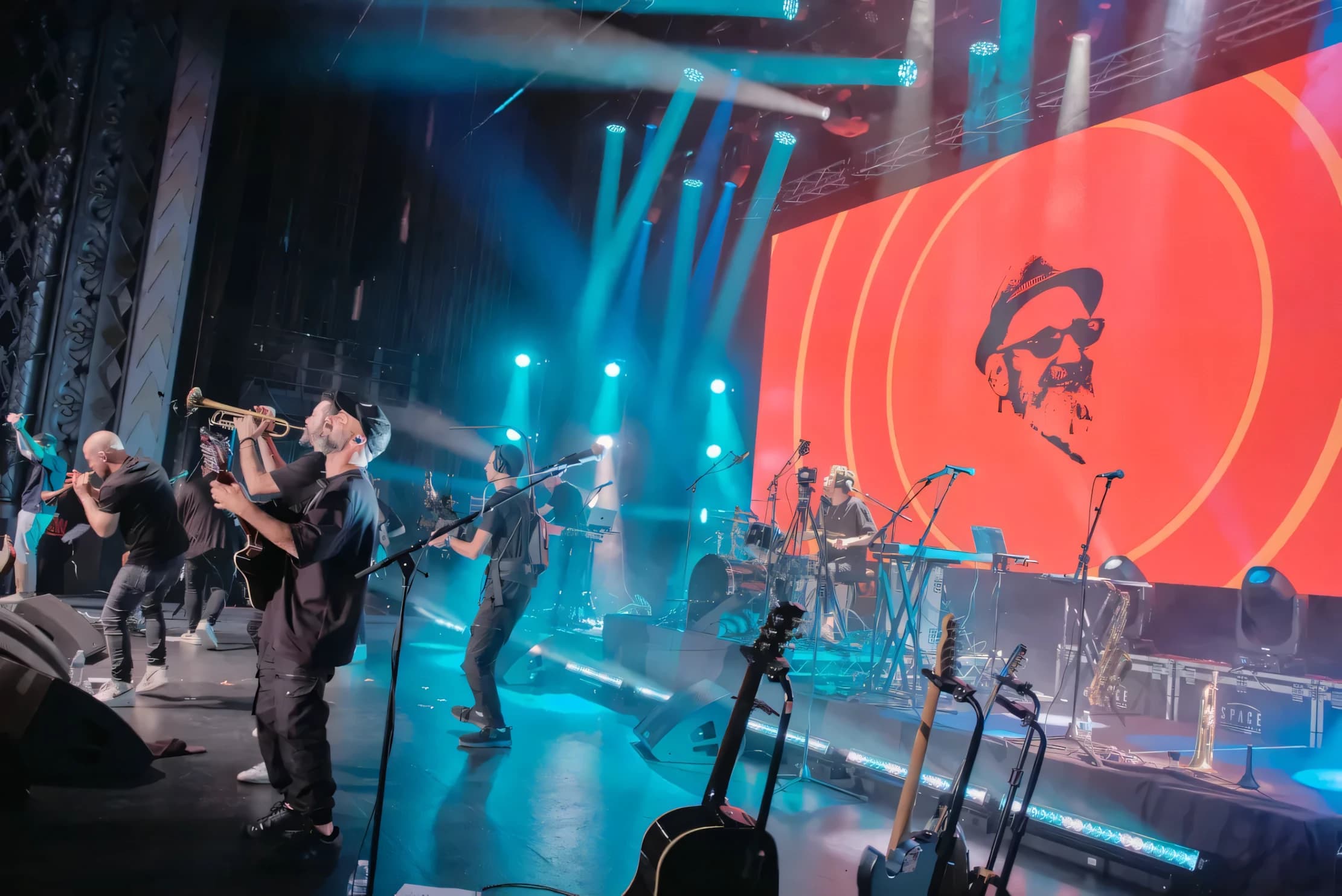
PerformerStage monitor (wedge)
A speaker on the deck angled back so performers hear themselves.
Ask for it when: Live music and any presenter working with a band. Separate from what the audience hears.
PerformerIn-ear monitor (IEM)
A wireless earpiece feed replacing floor wedges.
Ask for it when: When the stage needs to stay quiet — broadcast, tight rooms, or noise-limited sites. Also cleaner for the audience mix.
ControlFOH console
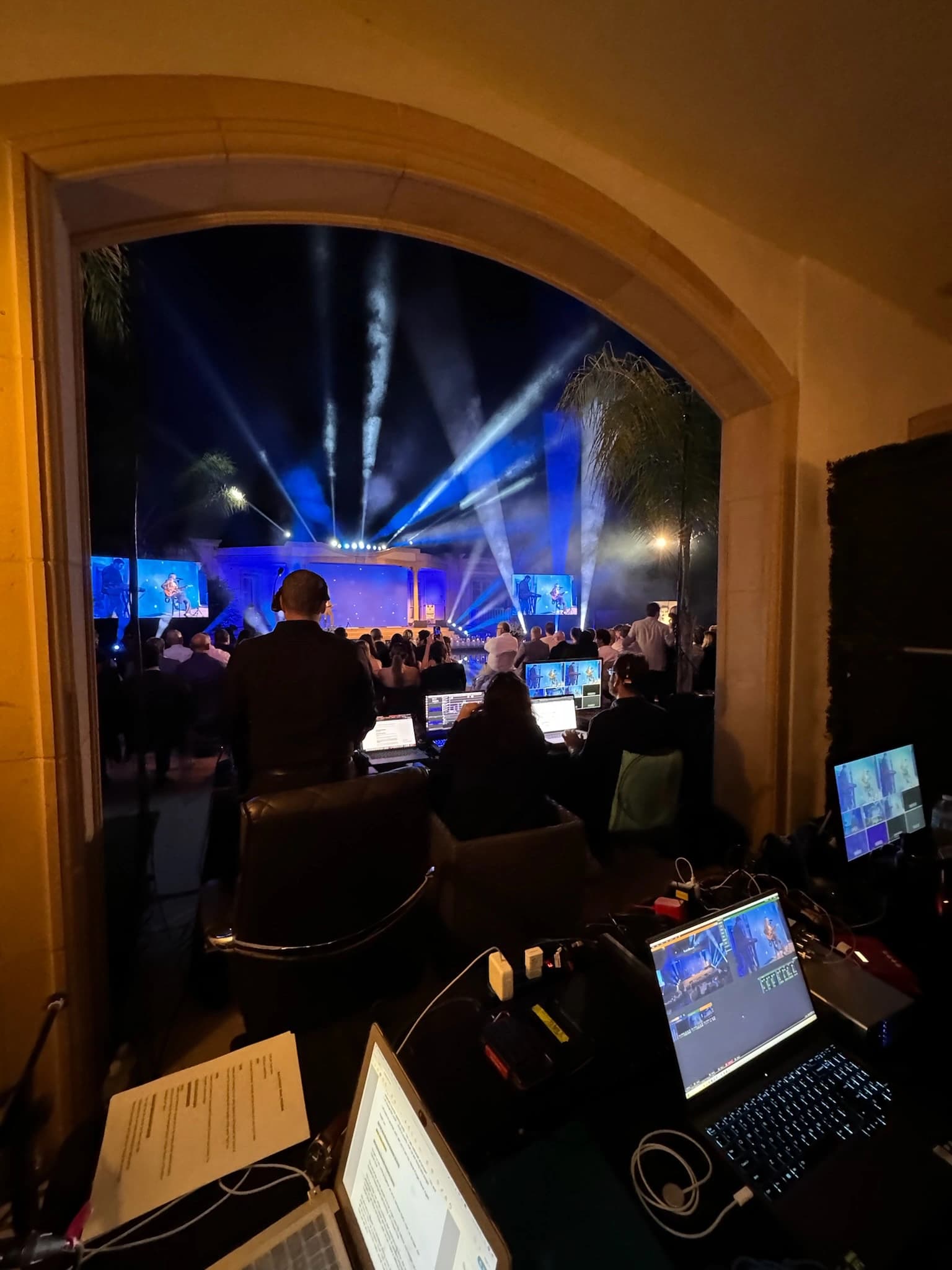
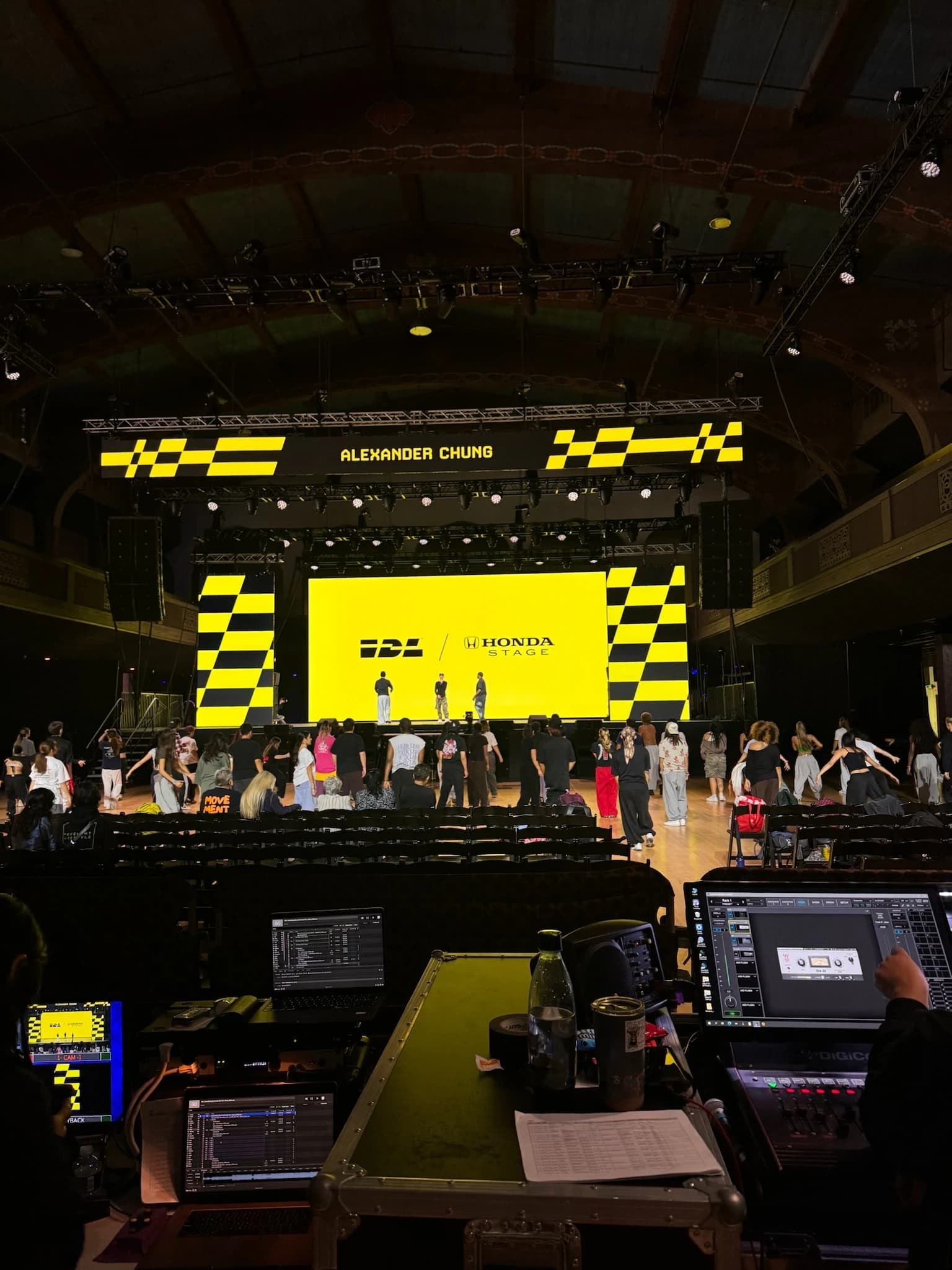
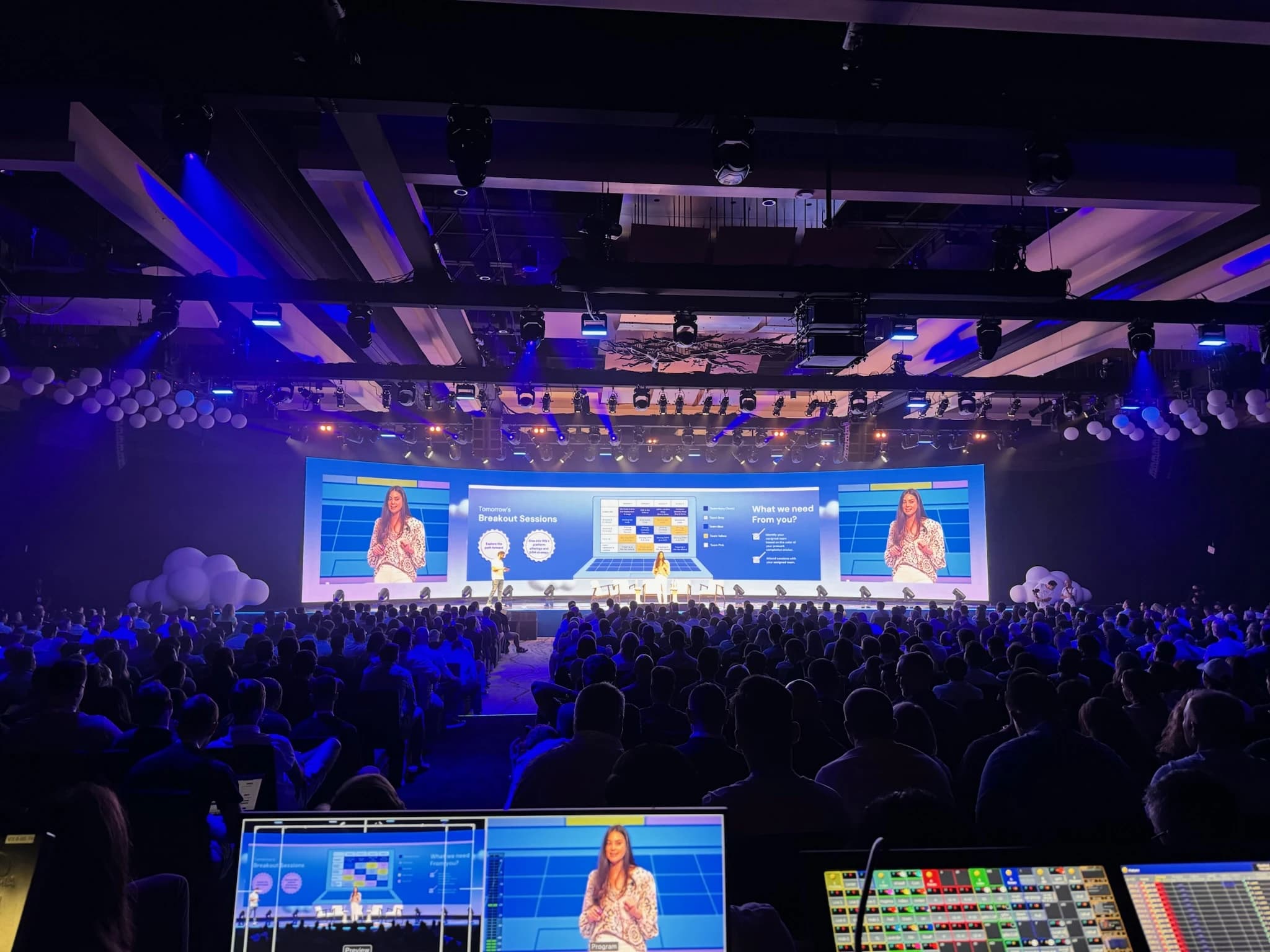
The front-of-house desk where the audience mix is made, out in the room rather than backstage.
Ask for it when: Every show. If the mix position isn’t in the room, nobody is hearing what your guests hear.
MicrophoneHandheld wireless
A wireless mic held or on a stand.
Ask for it when: Q&A, panels, and anyone who won’t wear a pack. The most forgiving mic for an inexperienced speaker.
MicrophoneLavalier (lav)
A small clip-on mic with a bodypack transmitter.
Ask for it when: Presenters who need their hands free and want the mic largely invisible on camera.
MicrophoneHeadset mic
A thin over-ear mic sitting at a fixed distance from the mouth.
Ask for it when: Presenters who move a lot, and any room where a lav would be too quiet. More consistent than a lav, more visible.
MicrophoneGooseneck / podium mic
A fixed mic mounted on the lectern.
Ask for it when: Formal programmes and anyone reading from the podium. Wired, so it can’t drop mid-sentence.
ConnectionDI box
A small box converting a laptop, instrument, or playback source into a clean, hum-free feed.
Ask for it when: Any time video playback or a laptop is going through the system. It’s the fix for buzz nobody can locate.
WirelessRF coordination
Scanning the venue’s radio spectrum on the day and assigning every wireless channel a clear frequency.
Ask for it when: Any show with more than a couple of wireless channels. It’s why mics drop, and it’s entirely preventable.
AccessAssistive listening
A separate feed to receivers for guests who are hard of hearing.
Ask for it when: Public-facing and many corporate events — often an accessibility requirement rather than an option.