Event Lighting That Lands on Cue
Lighting is invisible direction — the audience feels a moment change without noticing why. Here’s what separates a programmed, camera-ready rig from a generic one hung in the dark.
Good lighting is the difference between a room that feels produced and one that feels fluorescent. It sets mood, directs attention, and makes a presenter read clean on camera — and when it’s done well, nobody in the audience can tell you why the moment hit. Here’s how that gets built.
Light is invisible direction
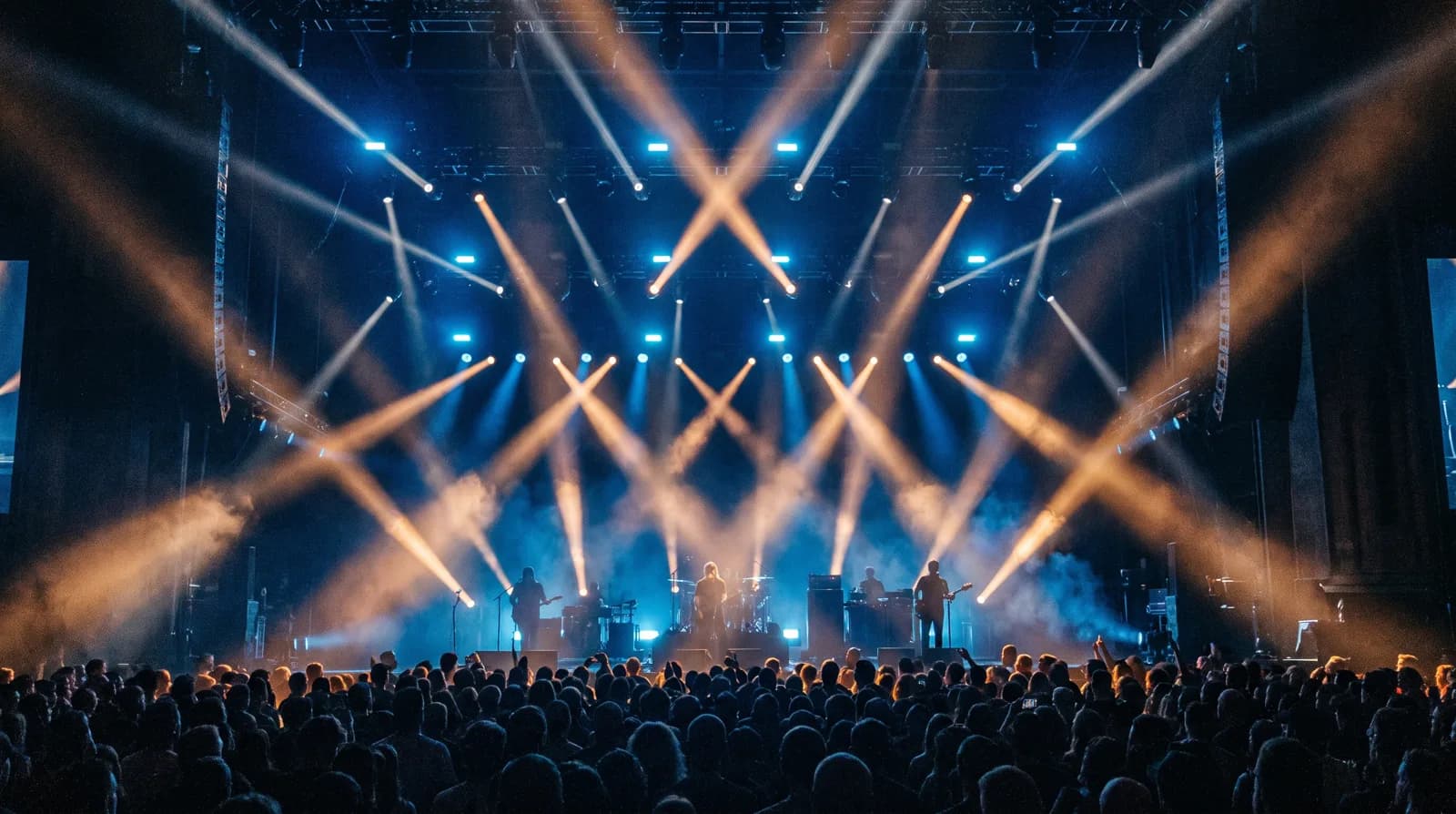
Every cue is a decision about where the audience looks and how they feel. A wash sets the tone, a key light makes a face readable, a back light separates a performer from the LED behind them, an effect punch hits on the downbeat. Designed together, they move a show without anyone noticing the machinery.

Key, wash, back, effect
A real rig is layered: key for faces, wash for the stage and room, back and rim to add depth, and effect fixtures for the big moments. Placement and focus are matched to the actual room and the run-of-show — not a generic rig flown in the dark and hoped for.
Programmed, not winged
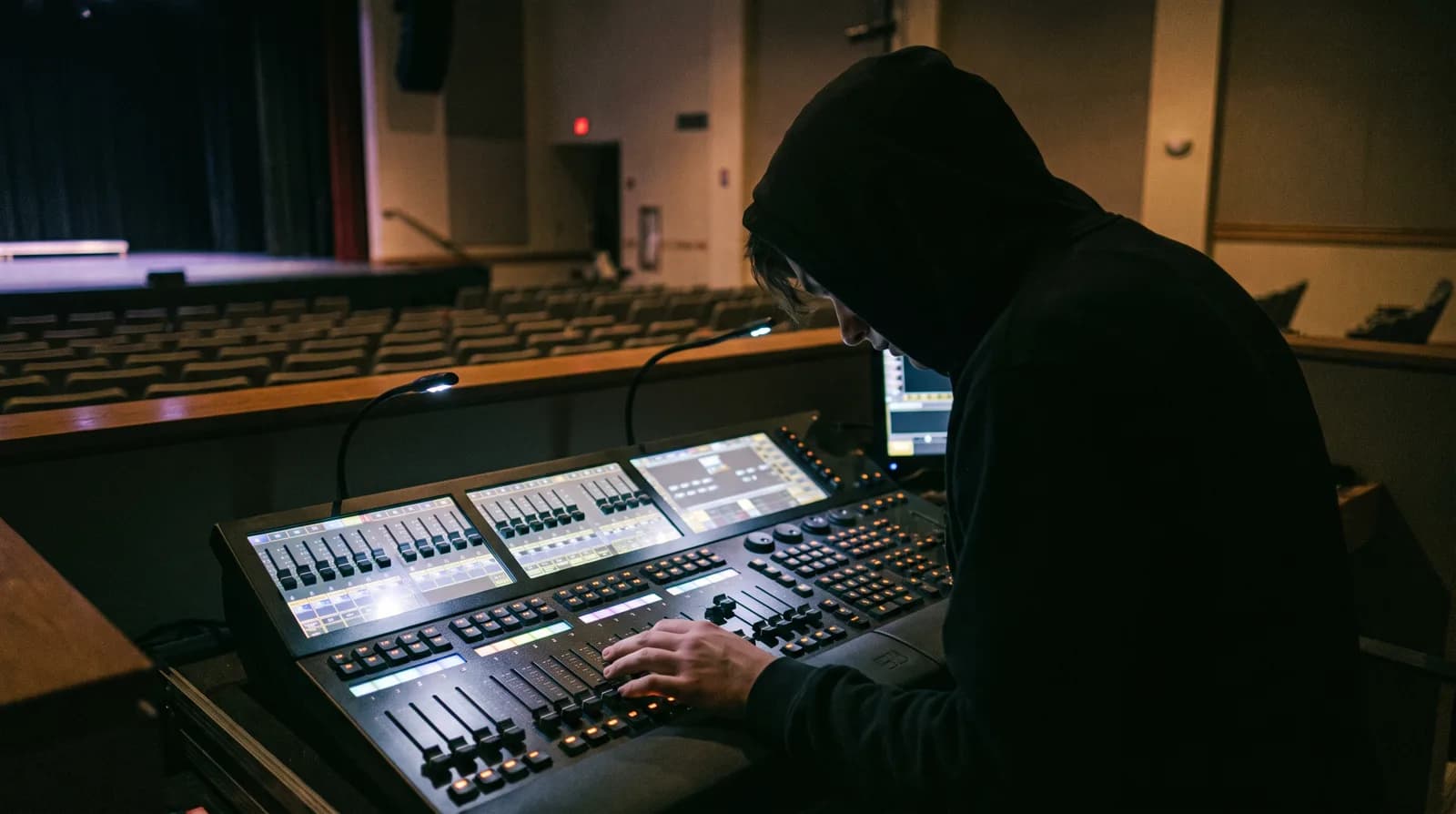
The looks are pre-programmed on a pro console and timed to the content and music before doors, then run live by a board operator who adjusts on the fly. Nothing is assembled in front of your audience; it’s rehearsed, repeatable, and on the beat — so the cue that’s supposed to hit on a word actually hits on the word.
Camera-ready
For anything on IMAG or a stream, lighting and camera are one conversation: even key, controlled contrast, and color tuned so skin reads natural on the lens. The same rig has to please the eye in the room and the sensor on the camera — and a design that ignores the camera looks great live and broken on the broadcast.
Key takeaways
- Lighting is direction: key, wash, back, and effect layers placed for the room and the run-of-show.
- Pre-program and rehearse cues on the desk, then run them live — never build looks in front of the audience.
- If it’s on camera, light for the lens too: even key, controlled contrast, natural skin tone.